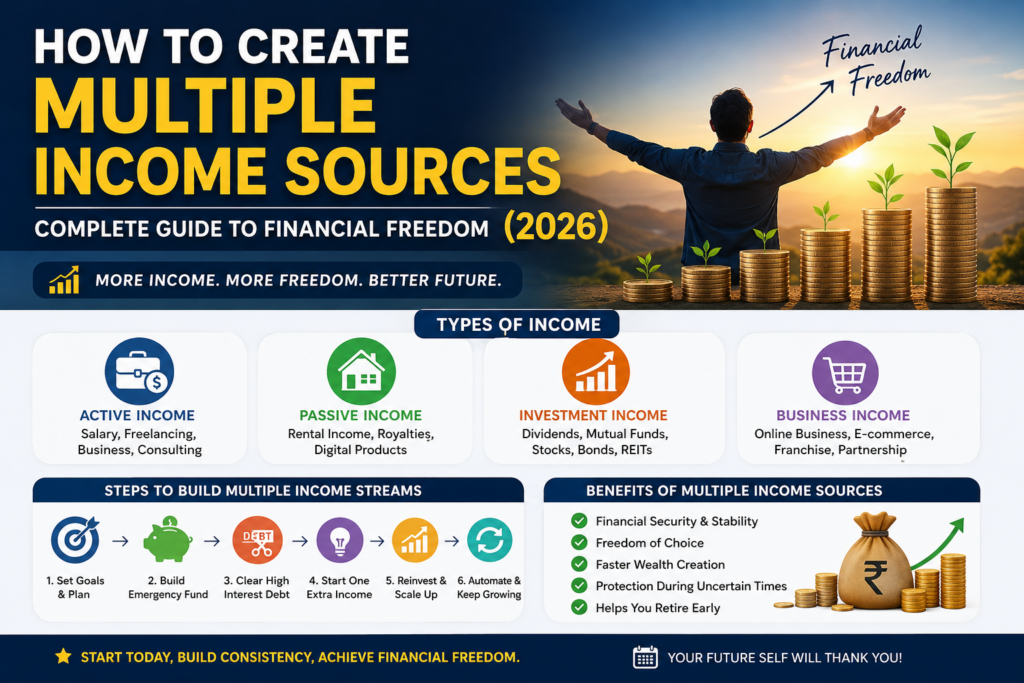
💰 Passive Income Investment Ideas: Complete Guide to Building Long-Term Wealth (2026)
Passive income is one of the most effective ways to achieve financial freedom. Unlike active income, passive income allows you to earn money from investments or assets with minimal ongoing effort. Building multiple passive income streams can improve financial security, reduce dependence on salary, and help create long-term wealth.
In this complete 2026 guide, you’ll learn the best passive income investment ideas, their benefits, potential risks, and practical strategies for creating a sustainable passive income portfolio.
📖 Read Complete Guide
1. What is Passive Income?
Passive income is money earned from investments or assets that require little day-to-day involvement after the initial setup. While many passive income sources require upfront capital, time, or effort, they can provide ongoing income over the long term.
2. Benefits of Passive Income
- ✅ Financial freedom
- ✅ Additional monthly income
- ✅ Long-term wealth creation
- ✅ Reduced dependence on salary
- ✅ Better retirement planning
- ✅ Opportunity to diversify income sources
3. Best Passive Income Investment Ideas
| Investment | Potential Benefit | Risk Level |
|---|---|---|
| Equity Mutual Funds (SIP) | Long-term wealth creation | Moderate to High |
| Dividend Stocks | Regular dividend income | Moderate |
| REITs | Real estate income without owning property | Moderate |
| Bonds | Stable interest income | Low to Moderate |
| Fixed Deposits | Predictable returns | Low |
| Rental Property | Rental income & capital appreciation | Moderate |
| Digital Products | Royalties and recurring sales | Low Initial Cost |
4. How to Build Passive Income
- Create an emergency fund.
- Invest consistently through SIPs.
- Diversify across different asset classes.
- Reinvest your earnings.
- Increase investments as income grows.
- Review your portfolio every year.
5. Common Mistakes to Avoid
- ❌ Expecting instant income.
- ❌ Investing without research.
- ❌ Depending on a single income source.
- ❌ Ignoring diversification.
- ❌ Chasing unrealistic returns.
6. Passive Income Checklist
| Task | Status |
|---|---|
| Build Emergency Fund | ☐ |
| Start Monthly SIP | ☐ |
| Diversify Investments | ☐ |
| Reinvest Earnings | ☐ |
| Review Portfolio Annually | ☐ |
Frequently Asked Questions (FAQs)
Q1. What is passive income?
Passive income is money earned from investments or assets with limited ongoing effort after the initial setup.
Q2. Which investment is best for passive income?
The right choice depends on your financial goals, risk tolerance, investment horizon, and overall financial plan.
Q3. Can SIPs generate passive wealth?
SIPs are a disciplined investment method that many investors use for long-term wealth creation. Returns depend on market performance.
Q4. Is diversification important?
Yes. Diversifying across different investments can help manage risk and improve portfolio stability.
Key Takeaway
Building passive income requires patience, disciplined investing, diversification, and long-term planning. The earlier you begin, the greater the potential benefits of compounding and financial independence.
Disclaimer: This article is for educational purposes only and should not be considered financial, investment, or tax advice. Investments are subject to market risks. Please read all scheme-related documents carefully before investing and consult a qualified financial advisor before making investment decisions.