How to Read a Mutual Fund Factsheet: Complete Beginner’s Guide (2026)

Posted on July 19, 2026 by admin

Mutual Fund Taxation 2026 – Complete Tax Guide for Indian Investors | InvestSathi

πŸ“„ How to Read a Mutual Fund Factsheet: Complete Beginner’s Guide (2026)

A Mutual Fund Factsheet is a monthly document published by every Asset Management Company (AMC) that provides detailed information about a mutual fund scheme. Learning how to read a factsheet helps investors evaluate fund performance, risk, portfolio quality, costs, and suitability before investing.

In this guide, you’ll learn how to understand every important section of a Mutual Fund Factsheet and make smarter investment decisions.

πŸ“– Read Complete Guide

1. What is a Mutual Fund Factsheet?

A Mutual Fund Factsheet is a summary report that shows important details about a scheme, including fund objectives, portfolio holdings, returns, risk measures, expense ratio, fund manager details, and asset allocation.


2. Key Information in a Mutual Fund Factsheet

Section Why It Matters
Fund Objective Shows the investment goal of the scheme.
Fund Manager Provides details of the person managing the fund.
AUM (Assets Under Management) Indicates the total assets managed by the fund.
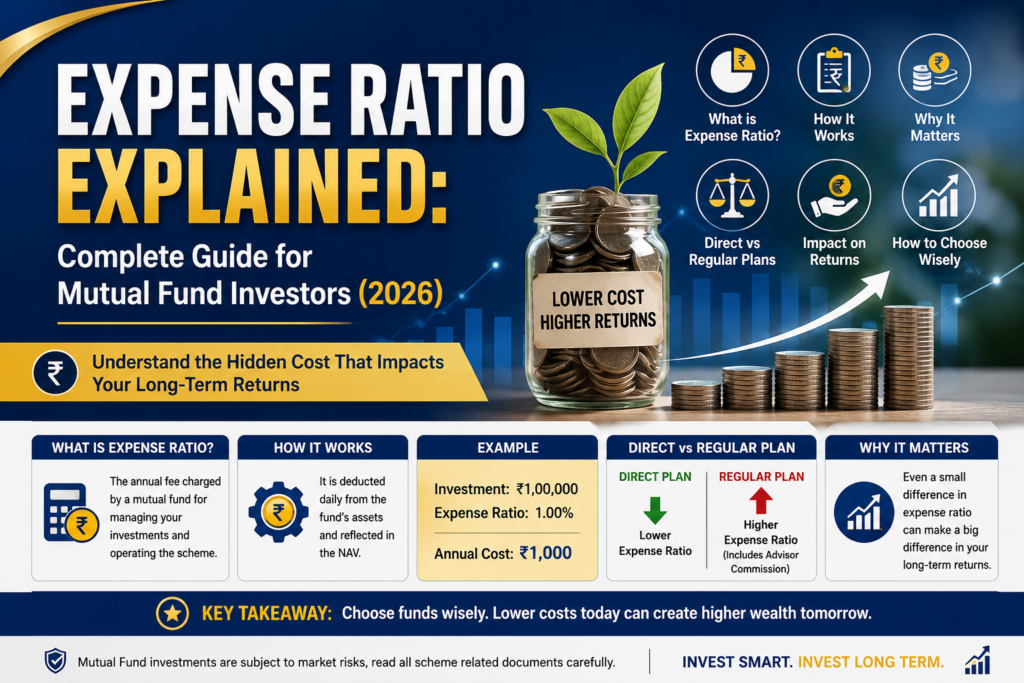
Expense Ratio Shows the annual cost of managing the fund.
Portfolio Holdings Lists the securities held by the fund.
Asset Allocation Displays the allocation across Equity, Debt, Cash, etc.
Performance Shows historical returns over different periods.
Benchmark Compares the fund’s performance with a market index.

3. Important Ratios to Understand

  • πŸ“Š Expense Ratio – Lower costs may improve long-term returns.
  • πŸ“ˆ Alpha – Measures performance relative to the benchmark.
  • βš–οΈ Beta – Measures sensitivity to market movements.
  • πŸ“‰ Standard Deviation – Indicates volatility.
  • πŸ† Sharpe Ratio – Measures risk-adjusted return.
  • πŸ“Œ Portfolio Turnover Ratio – Shows how frequently the portfolio is changed.

4. How to Evaluate a Mutual Fund Factsheet

  • βœ… Check whether the fund objective matches your financial goals.
  • βœ… Compare long-term performance instead of short-term returns.
  • βœ… Review expense ratio and risk indicators.
  • βœ… Analyze portfolio diversification.
  • βœ… Compare the fund with its benchmark and peer funds.

5. Common Mistakes to Avoid

  • ❌ Investing only based on recent returns.
  • ❌ Ignoring expense ratio.
  • ❌ Not checking portfolio concentration.
  • ❌ Ignoring risk metrics.
  • ❌ Selecting funds without understanding the investment objective.

6. Why Factsheets Are Important

  • βœ” Better investment decisions.
  • βœ” Portfolio transparency.
  • βœ” Risk assessment.
  • βœ” Easier fund comparison.
  • βœ” Improved long-term investing discipline.

Frequently Asked Questions (FAQs)

Q1. How often is a Mutual Fund Factsheet updated?
Most AMCs publish a new factsheet every month.

Q2. Is a higher AUM always better?
Not necessarily. AUM is only one factor and should be considered along with the fund’s strategy, performance, and suitability.

Q3. Why is the Expense Ratio important?
It represents the annual cost of managing the fund. Lower costs can positively impact long-term returns, all else being equal.

Q4. Can beginners use a Mutual Fund Factsheet?
Yes. Once you understand the key sections and ratios, a factsheet becomes a valuable tool for evaluating mutual funds.


Key Takeaway

A Mutual Fund Factsheet provides essential information about a fund’s objectives, portfolio, costs, risk, and performance. Reading it carefully helps you make informed investment decisions instead of relying only on past returns.


Final Thoughts

Before investing in any Mutual Fund, take a few minutes to review its factsheet. Understanding the fund’s objective, portfolio composition, expense ratio, and risk metrics can help you choose investments that align with your financial goals and risk tolerance.


Disclaimer: This article is for educational purposes only and should not be considered financial or investment advice. Mutual Fund investments are subject to market risks. Please read all scheme-related documents carefully before investing.

Mutual Fund Taxation 2026: Complete Tax Guide for Indian Investors

Posted on by admin

πŸ’° Mutual Fund Taxation 2026: Complete Tax Guide for Indian Investors

Understanding Mutual Fund Taxation is essential because taxes directly impact your investment returns. The tax treatment depends on the type of Mutual Fund (Equity or Debt), the holding period, and the applicable capital gains rules.

This 2026 guide explains how Equity, Hybrid, Debt, ELSS, SIPs, and dividends are taxed in India so you can make informed investment decisions.

πŸ“– Read Complete Guide

1. How Mutual Funds are Taxed

Mutual Fund taxation is based on:

  • βœ… Type of Mutual Fund
  • βœ… Holding Period
  • βœ… Capital Gains (Short-Term or Long-Term)
  • βœ… Applicable Income Tax Rules

2. Equity Mutual Fund Taxation (2026)

Holding Period Tax Type Tax Rate
Up to 12 Months Short-Term Capital Gain (STCG) 20%
More than 12 Months Long-Term Capital Gain (LTCG) 12.5% on gains exceeding β‚Ή1.25 lakh in a financial year

3. Debt Mutual Fund Taxation

For most Debt Mutual Fund investments made on or after 1 April 2023, gains are generally added to your taxable income and taxed according to your applicable income tax slab, irrespective of the holding period. Older investments may follow different transitional rules. :contentReference[oaicite:0]{index=0}


4. ELSS Taxation

  • βœ… Lock-in Period: 3 Years
  • βœ… LTCG Tax: 12.5% above β‚Ή1.25 lakh annual exemption.
  • βœ… Eligible for tax deduction under Section 80C (subject to applicable limits under the chosen tax regime).

5. SIP Taxation

Each SIP installment is treated as a separate investment. The holding period for each installment is calculated individually from its purchase date.

  • πŸ“… Each SIP installment has its own purchase date.
  • πŸ“ˆ Capital gains are calculated separately for every redemption.
  • πŸ’° FIFO (First In, First Out) method generally applies while redeeming SIP units.

6. Dividend Taxation

Dividends received from Mutual Funds are taxable according to the investor’s applicable income tax slab. They are added to your total taxable income. :contentReference[oaicite:1]{index=1}


7. Tax Saving Tips

  • βœ… Hold Equity Funds for more than 12 months where appropriate.
  • βœ… Plan redemptions carefully to make efficient use of the annual LTCG exemption.
  • βœ… Consider ELSS for eligible tax-saving investments.
  • βœ… Maintain proper investment records.
  • βœ… Consult a tax professional for complex situations.

Common Mistakes to Avoid

  • ❌ Ignoring tax implications before redeeming investments.
  • ❌ Assuming all Mutual Funds are taxed the same way.
  • ❌ Forgetting that each SIP installment has a separate holding period.
  • ❌ Missing capital gains reporting in your Income Tax Return.
  • ❌ Investing only for tax benefits without considering financial goals.

Frequently Asked Questions (FAQs)

Q1. What is the LTCG tax on Equity Mutual Funds in 2026?
Long-term capital gains are taxed at 12.5% on gains exceeding β‚Ή1.25 lakh in a financial year. :contentReference[oaicite:2]{index=2}

Q2. What is the STCG tax on Equity Mutual Funds?
Short-term capital gains on Equity Mutual Funds are taxed at 20%. :contentReference[oaicite:3]{index=3}

Q3. Are Debt Mutual Funds taxed differently?
Yes. For most investments made on or after 1 April 2023, gains are generally taxed according to your applicable income tax slab. :contentReference[oaicite:4]{index=4}

Q4. Is dividend from Mutual Funds tax-free?
No. Dividends are generally taxable in the hands of the investor according to the applicable income tax rules. :contentReference[oaicite:5]{index=5}


Key Takeaway

Understanding Mutual Fund taxation helps you make better investment decisions, reduce unnecessary tax outgo, and improve your post-tax returns through proper planning.


Final Thoughts

Tax rules can change over time. Before redeeming Mutual Fund investments, review the latest tax provisions and consider consulting a qualified tax advisor or financial planner to understand how the rules apply to your situation.


Disclaimer: This article is for educational purposes only and should not be considered tax or investment advice. Tax laws may change, and their application depends on individual circumstances. Mutual Fund investments are subject to market risks. Please read all scheme-related documents carefully before investing.

STP Explained: Systematic Transfer Plan – Complete Guide (2026)

Posted on by admin

How to Read a Mutual Fund Factsheet – Complete Beginner's Guide (2026) | InvestSathi

πŸ”„ STP Explained: Systematic Transfer Plan – Complete Guide (2026)

A Systematic Transfer Plan (STP) is a facility offered by Mutual Funds that allows investors to transfer a fixed amount periodically from one Mutual Fund scheme (usually a Debt or Liquid Fund) to another scheme (typically an Equity Fund). It helps investors gradually invest their lump-sum money while reducing the impact of market volatility.

In this guide, you’ll learn how STP works, its benefits, when to use it, and how it differs from SIP and SWP.

πŸ“– Read Complete Guide

1. What is STP?

A Systematic Transfer Plan (STP) enables you to invest a lump sum in a low-risk Mutual Fund, such as a Liquid or Debt Fund, and gradually transfer a fixed amount into an Equity Mutual Fund at regular intervals.


2. How Does STP Work?

  • βœ… Invest a lump sum in a Liquid or Debt Fund.
  • βœ… Decide the transfer amount.
  • βœ… Choose transfer frequency (Daily, Weekly, Monthly, etc.).
  • βœ… Money is automatically transferred to the selected Equity Fund.
  • βœ… Helps reduce market timing risk through phased investing.

3. STP vs SIP vs SWP

Feature SIP STP SWP
Purpose Regular Investment Transfer Between Funds Regular Withdrawal
Source Bank Account Mutual Fund Mutual Fund
Best For Monthly Investors Lump Sum Investors Regular Income
Cash Flow Investment Fund Transfer Withdrawal

4. Benefits of STP

  • βœ… Reduces market timing risk.
  • βœ… Makes lump-sum investing more disciplined.
  • βœ… Potentially earns returns while money waits in a Debt/Liquid Fund.
  • βœ… Automatic investment process.
  • βœ… Helps maintain investment discipline.

5. Who Should Use STP?

  • πŸ’° Investors with a large lump sum.
  • πŸ“ˆ Investors entering volatile equity markets.
  • 🎯 Long-term wealth creators.
  • πŸ‘¨β€πŸ’Ό Investors wanting gradual equity exposure.

6. Common Mistakes to Avoid

  • ❌ Investing directly in Equity during high market volatility without a plan.
  • ❌ Ignoring exit load and taxation.
  • ❌ Selecting the wrong transfer frequency.
  • ❌ Not reviewing your investment goals.
  • ❌ Assuming STP eliminates all market risk.

7. Things to Consider Before Starting STP

  • πŸ“Š Market conditions.
  • πŸ’° Amount available for investment.
  • πŸ“… Investment horizon.
  • βš–οΈ Risk tolerance.
  • 🎯 Financial goals.

Frequently Asked Questions (FAQs)

Q1. What is STP in Mutual Funds?
STP allows you to periodically transfer money from one Mutual Fund scheme to another, usually from a Debt Fund to an Equity Fund.

Q2. Is STP better than investing a lump sum directly?
For some investors, STP can reduce the risk of investing all the money at one point in time, especially during volatile markets. It does not guarantee better returns.

Q3. Can I stop my STP anytime?
Yes. Most fund houses allow you to modify or stop your STP as per their terms and conditions.

Q4. Is STP suitable for beginners?
STP can be useful for investors who have a lump sum and want to gradually invest in Equity Mutual Funds instead of investing all at once.


Key Takeaway

A Systematic Transfer Plan (STP) helps investors gradually move a lump-sum investment into Equity Mutual Funds. It promotes disciplined investing and may reduce market timing risk, but investment decisions should always align with your financial goals and risk profile.


Final Thoughts

If you have a large amount ready to invest but are concerned about market volatility, an STP can be a practical approach. Before starting, understand the scheme features, tax implications, exit loads, and ensure the strategy fits your long-term financial plan.


Disclaimer: This article is for educational purposes only and should not be considered financial or investment advice. Mutual Fund investments are subject to market risks. Please read all scheme-related documents carefully before investing.

SWP Explained: Systematic Withdrawal Plan – Complete Guide (2026)

Posted on by admin

Risk Profile Explained – How to Identify Your Investment Risk Level (2026 Guide) | InvestSathi

πŸ’° SWP Explained: Systematic Withdrawal Plan – Complete Guide (2026)

A Systematic Withdrawal Plan (SWP) is a facility offered by Mutual Funds that allows investors to withdraw a fixed amount from their investment at regular intervals while the remaining amount stays invested and continues to participate in market movements.

SWP is widely used by retirees, investors seeking regular income, and anyone looking to generate cash flow without redeeming their entire investment at once.

πŸ“– Read Complete Guide

1. What is SWP?

A Systematic Withdrawal Plan (SWP) lets you withdraw a fixed amount from your Mutual Fund investment monthly, quarterly, half-yearly, or annually. The remaining balance continues to stay invested and has the potential to grow over time depending on market performance.


2. How Does SWP Work?

  • βœ… Invest a lump sum in a Mutual Fund.
  • βœ… Choose your withdrawal amount.
  • βœ… Select withdrawal frequency (Monthly, Quarterly, etc.).
  • βœ… Receive regular payouts directly into your bank account.
  • βœ… Remaining investment continues to stay invested.

3. SWP vs SIP vs STP

Feature SIP STP SWP
Purpose Regular Investment Transfer Between Funds Regular Withdrawal
Best For Wealth Creation Gradual Investing Regular Income
Cash Flow Outflow Transfer Inflow
Suitable For Salaried Investors Lump Sum Investors Retirees & Income Seekers

4. Benefits of SWP

  • βœ… Regular income from investments.
  • βœ… Remaining money stays invested.
  • βœ… Helps manage cash flow after retirement.
  • βœ… Flexibility to change or stop withdrawals.
  • βœ… May help reduce the need to redeem the entire investment at once.

5. Who Should Consider SWP?

  • πŸ‘΄ Retired individuals looking for regular income.
  • πŸ‘¨β€πŸ‘©β€πŸ‘§ Families requiring monthly cash flow.
  • πŸ’Ό Investors with a large lump-sum investment.
  • πŸ“ˆ Investors seeking periodic withdrawals while remaining invested.

6. Common Mistakes to Avoid

  • ❌ Withdrawing more than your portfolio can reasonably sustain.
  • ❌ Ignoring taxation and exit load implications.
  • ❌ Choosing high-risk funds for income needs without understanding the risks.
  • ❌ Never reviewing your withdrawal plan.
  • ❌ Using SWP without aligning it to financial goals.

7. Things to Consider Before Starting SWP

  • πŸ“Š Investment objective.
  • πŸ“… Withdrawal frequency.
  • πŸ’° Required monthly income.
  • πŸ“ˆ Expected investment horizon.
  • βš–οΈ Risk tolerance and portfolio allocation.

Frequently Asked Questions (FAQs)

Q1. What is SWP in Mutual Funds?
SWP is a facility that allows investors to withdraw a fixed amount from their Mutual Fund investment at regular intervals.

Q2. Is SWP suitable for retirement?
SWP is commonly used by retirees who want regular income while keeping the remaining investment in the market.

Q3. Can I stop or change my SWP?
Yes. Most Mutual Fund houses allow investors to modify or discontinue their SWP instructions, subject to scheme rules.

Q4. Is SWP guaranteed income?
No. The value of the remaining investment depends on market performance. Mutual Fund investments are subject to market risks.


Key Takeaway

A Systematic Withdrawal Plan (SWP) can help generate regular cash flow while allowing the remaining investment to stay invested. It should be planned carefully based on your financial goals, risk tolerance, and income needs.


Final Thoughts

SWP can be a useful option for investors seeking periodic withdrawals from their Mutual Fund investments. Before starting an SWP, evaluate your financial goals, expected expenses, investment horizon, and consult a qualified financial advisor if needed.


Disclaimer: This article is for educational purposes only and should not be considered financial or investment advice. Mutual Fund investments are subject to market risks. Please read all scheme-related documents carefully before investing.

Goal Based Investing Guide 2026 | Smart Financial Goal Planning

Posted on July 16, 2026 by admin

Goal Based Investing infographic explaining financial goal planning for retirement, child education, home purchase, emergency fund, and long-term wealth creation.

🎯 Goal Based Investing: A Smart Way to Achieve Your Financial Goals (2026 Guide)

Goal Based Investing is an investment strategy where every investment is linked to a specific financial goal instead of simply chasing high returns. Whether you’re planning for your child’s education, retirement, buying a house, or building wealth, investing with a clear goal helps you stay disciplined and make better financial decisions.

In this complete guide, you’ll learn what Goal Based Investing is, why it’s important, how to create an investment plan, and which investment options are suitable for different financial goals.

πŸ“– Read Complete Guide

1. What is Goal Based Investing?

Goal Based Investing means allocating your investments according to your financial objectives. Instead of investing randomly, every rupee has a purpose and a timeline.


2. Why is Goal Based Investing Important?

  • βœ… Helps achieve financial goals systematically.
  • βœ… Improves financial discipline.
  • βœ… Reduces emotional investing.
  • βœ… Matches investments with your risk profile.
  • βœ… Creates a well-planned investment strategy.

3. Types of Financial Goals

Goal Type Time Horizon Suitable Investments
Emergency Fund Immediate Liquid Funds, Savings Account
Car Purchase 2–5 Years Short Duration Debt Funds
Home Purchase 5–10 Years Hybrid & Equity Mutual Funds
Child Education 10–18 Years Equity Mutual Funds
Retirement 15+ Years Equity Funds, NPS, Index Funds

4. Steps to Create a Goal Based Investment Plan

  • 🎯 Define your financial goal.
  • πŸ“… Decide the investment time horizon.
  • πŸ’° Estimate the future amount required.
  • πŸ“ˆ Choose suitable investment products.
  • πŸ”„ Review and rebalance your portfolio regularly.

5. Benefits of Goal Based Investing

  • βœ… Better financial planning.
  • βœ… Focus on long-term wealth creation.
  • βœ… Reduced investment mistakes.
  • βœ… Easier portfolio tracking.
  • βœ… Greater confidence during market volatility.

6. Common Mistakes to Avoid

  • ❌ Investing without a goal.
  • ❌ Ignoring inflation while calculating future costs.
  • ❌ Taking excessive investment risk.
  • ❌ Stopping SIPs during market corrections.
  • ❌ Not reviewing your investment plan annually.

7. Which Investments Are Best for Different Goals?

  • πŸ’§ Short-Term Goals: Liquid Funds, Debt Funds.
  • 🏑 Medium-Term Goals: Hybrid Funds, Conservative Equity Funds.
  • πŸ“ˆ Long-Term Goals: Equity Mutual Funds, Index Funds, NPS.
  • πŸ›‘οΈ Wealth Protection: Gold and Emergency Fund.

Frequently Asked Questions (FAQs)

Q1. What is Goal Based Investing?
It is an investment strategy where investments are planned according to specific financial goals rather than market trends.

Q2. Why is Goal Based Investing important?
It helps investors stay disciplined, choose suitable investments, and achieve financial goals more efficiently.

Q3. Can SIP be used for Goal Based Investing?
Yes. SIPs are one of the most effective ways to invest regularly for long-term financial goals.

Q4. How often should I review my goals?
Review your investment plan at least once every year or whenever there is a major life event.


Key Takeaway

Goal Based Investing transforms your financial dreams into achievable milestones. By linking every investment to a specific objective, you build wealth with clarity, discipline, and confidence.


Final Thoughts

Successful investing is not about chasing the highest returnsβ€”it’s about reaching your financial goals on time. Whether you’re saving for retirement, a dream home, your child’s education, or financial independence, Goal Based Investing provides a structured path toward long-term success.


Disclaimer: This article is for educational purposes only and should not be considered financial or investment advice. Mutual Fund investments are subject to market risks. Please read all scheme-related documents carefully before investing.