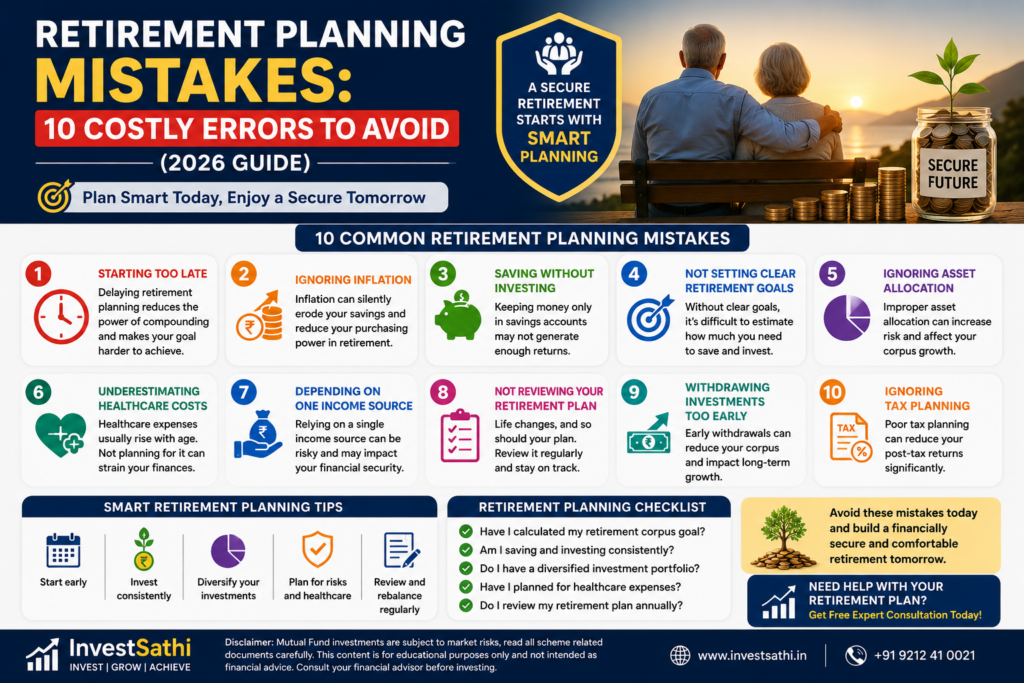
⚠️ Retirement Planning Mistakes: 10 Costly Errors to Avoid (2026 Guide)
Retirement planning is a long-term journey, and even small mistakes today can have a significant impact on your financial security in the future. Many people delay planning, underestimate expenses, or fail to invest wisely, making it difficult to build a sufficient retirement corpus.
In this complete 2026 guide, you’ll learn the most common retirement planning mistakes and practical strategies to avoid them so you can build a financially secure retirement.
📖 Read Complete Guide
1. Starting Retirement Planning Too Late
The biggest mistake is postponing retirement planning. Starting early provides more time for long-term investing and the potential benefits of compounding.
2. Ignoring Inflation
The cost of living generally rises over time. If inflation is ignored, your retirement savings may not provide the purchasing power you expect.
3. Saving Without Investing
Keeping all retirement money in savings accounts may not generate enough long-term growth. A suitable investment strategy can help your retirement corpus grow over time.
4. Not Setting Clear Retirement Goals
Without estimating your future expenses and desired lifestyle, it is difficult to determine how much you need to save for retirement.
5. Ignoring Asset Allocation
A well-diversified portfolio aligned with your risk tolerance and investment horizon can help balance growth potential and risk.
6. Underestimating Healthcare Costs
Healthcare expenses often increase with age. Planning for medical costs is an important part of retirement planning.
7. Depending on One Income Source
Relying only on one retirement income source may increase financial risk. Diversified income streams can improve financial resilience.
8. Not Reviewing Your Retirement Plan
Your financial goals, income, and family responsibilities change over time. Review your retirement plan annually or after major life events.
9. Withdrawing Investments Too Early
Early withdrawals can reduce the long-term growth potential of your retirement portfolio and interrupt the benefits of compounding.
10. Ignoring Tax Planning
Tax-efficient retirement planning can help improve overall investment efficiency and preserve more of your retirement corpus.
Retirement Planning Checklist
| Action | Status |
|---|---|
| Start Investing Early | ☐ |
| Estimate Retirement Corpus | ☐ |
| Build Emergency Fund | ☐ |
| Diversify Investments | ☐ |
| Review Plan Every Year | ☐ |
Frequently Asked Questions (FAQs)
Q1. What is the biggest retirement planning mistake?
Starting too late is one of the most common mistakes because it reduces the time available for long-term investing and compounding.
Q2. Why should inflation be considered?
Inflation increases the cost of living over time, which can reduce the purchasing power of your retirement savings.
Q3. How often should I review my retirement plan?
At least once a year or after major life changes such as marriage, a new job, or retirement goal changes.
Q4. Is diversification important for retirement?
Yes. Diversification can help manage investment risk and improve portfolio stability over the long term.
Key Takeaway
A successful retirement plan is built by starting early, investing consistently, accounting for inflation, diversifying wisely, and reviewing your strategy regularly. Avoiding these common mistakes can help improve your long-term financial security.
Disclaimer: This article is for educational purposes only and should not be considered financial, investment, tax, or retirement advice. Investments are subject to market risks. Please read all scheme-related documents carefully before investing and consult a qualified financial advisor before making investment decisions.