👨👩👧👦 Family Floater Health Insurance (2026): Complete Guide
Badhte hue medical kharchon ke dauran har family ke liye ek reliable health insurance policy hona behad zaroori hai. Alag-alag logo ke liye separate policies lene ke bajaye, ek Family Floater Health Insurance plan poore parivar ko ek hi affordable cover ke andar secure karta hai.
Sahi financial planning ke liye yeh samajhna behad zaroori hai ki family floater plan kaise kaam karta hai, iske kya benefits hain aur aapko isse select karte waqt kin baaton ka dhyan rakhna chahiye.
📖 Read Complete Family Floater Guide
What is Family Floater Health Insurance?
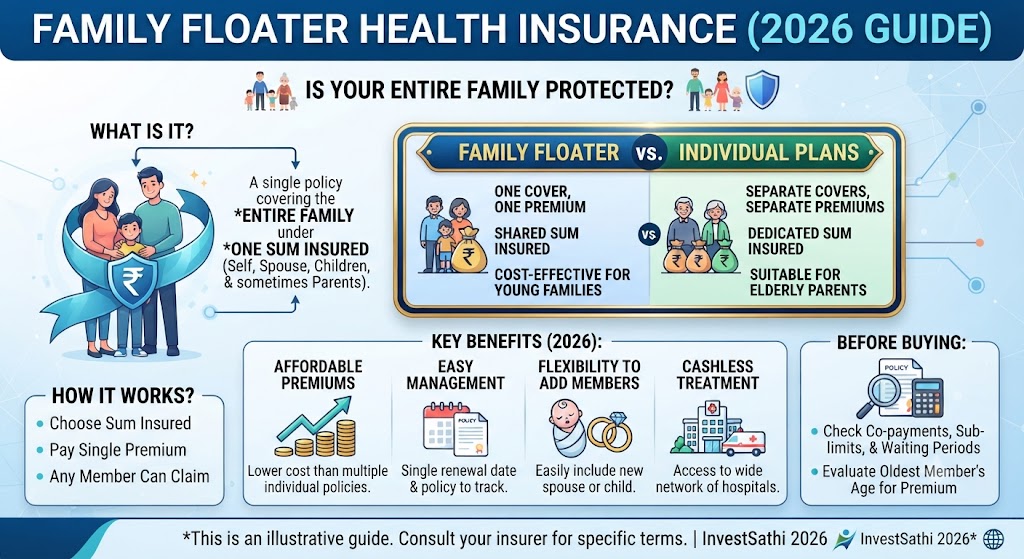
Family floater ek aisi single health insurance policy hai jo aapke poore parivar (aamtaur par self, spouse, dependent children, aur kai baar dependent parents) ko ek common sum insured ke antargat cover karti hai.
Isme sabhi members ek hi pool of money ko share karte hain. Agar kisi ek member ko medical emergency aati hai, toh woh policy ke daayre mein poore sum insured ko use kar sakta hai.
💡 Golden Rule: Separate individual policies ke jhanjhat se bachne ke liye family floater ek single, cost-effective aur smart solution hai.
Key Benefits of Family Floater Plans
- 💰 Cost-Effective Premiums: Alag-alag individual policies lene ke mukable ek shared cover ka premium kaafi kam aur sasta padta hai.
- 📂 Easy to Manage: Har saal sirf ek renewal date, ek policy document aur ek hi premium payment ko track karna hota hai.
- 👶 Flexibility to Add Members: Naye member jaise ki newborn baby ya spouse ko aasani se policy mein include kiya ja sakta hai.
- 🏥 Cashless Treatment Access: Hospitals ke bade network ke zariye desh bhar mein seamless cashless hospitalization ki suvidha milti hai.
- 💸 Tax Savings: Is policy par diye jaane wale premiums par Income Tax Act ke Section 80D ke tahat tax deductions ka labh milta hai.
How Does It Work?
-
Choose a Shared Sum Insured:
Aap apne parivar ki medical needs ke hisaab se ek total coverage amount (jaise 10 Lakhs ya 20 Lakhs) select karte hain. -
Pay Annual Premium:
Poore parivar ke liye ek single premium amount pay karke policy active ki jaati hai. -
Claim Utilization during Emergency:
Kisi bhi member ke bimar padne par, us shared sum insured me se hospital bills ka claim settle kiya jata hai.
Family Floater vs Individual Health Insurance
| Feature | Family Floater Plan | Individual Plan |
|---|---|---|
| Coverage Structure | Shared sum insured for all members | Separate sum insured for each member |
| Premium Cost | More economical and pocket-friendly | Higher because separate policies are bought |
| Best Suited For | Young couples and nuclear families | Elderly parents or individuals with high risks |
| Policy Management | Single policy and renewal date | Multiple policies to track individually |
| Tax Saving Section | Section 80D | Section 80D |
What Should You Check Before Buying?
- Sum Insured Adequacy: Kya poore parivar ke liye chuna gaya coverage amount aaj ke medical inflation ke hisaab se kaafi hai?
- Age of the Eldest Member: Premium aamtaur par sabse bade member ki umar par depend karta hai. Agar parents shamil hain, toh unke liye senior citizen plan alag se lena behtar ho sakta hai.
- Waiting Periods: Pre-existing diseases (PED) aur maternity benefits ke liye kitne saal ka waiting period hai, yeh zaroor check karein.
- No Claim Bonus (NCB): Kya bina claim wale saal par sum insured badhta hai ya cumulative bonus milta hai?
Frequently Asked Questions
Q1. Kya family floater mein parents ko bhi add kar sakte hain?
Haan, lekin agar parents ki umar zyada hai toh unhe add karne se poori policy ka premium kaafi mehanga ho sakta hai. Aise mein unke liye alag policy consider karein.
Q2. Agar ek hi saal mein do members bimar pad jayein toh kya hoga?
Dono members total shared sum insured ki limit tak apna medical kharcha claim kar sakte hain jab tak limit khatam nahi hoti.
Q3. Isme tax benefit kaise milta hai?
Family floater policy ke premium payment par aapko Section 80D ke antargat tax deduction milti hai.
Key Takeaway
🛡️ Family Floater Health Insurance aapke poore parivar ko medical emergencies ke waqt ek mazboot financial safety net deta hai.
Smart Coverage + Affordable Premium = Complete Family Protection
Get Your Family Insurance Review
Aapki family ki size, members ki age aur budget ke mutabiq sabse behtareen health insurance plan chunne ke liye expert guidance lein.
InvestSathi ke saath apni family ke protection cover ko review karke sahi policy select karein.
Disclaimer: This article is for educational and informational purposes only and should not be considered professional financial or insurance advice. Insurance products are subject to terms, conditions, and underwriting guidelines. Please read policy documents thoroughly before purchasing.