Why Rich Investors Don’t Rely Only on Mutual Funds
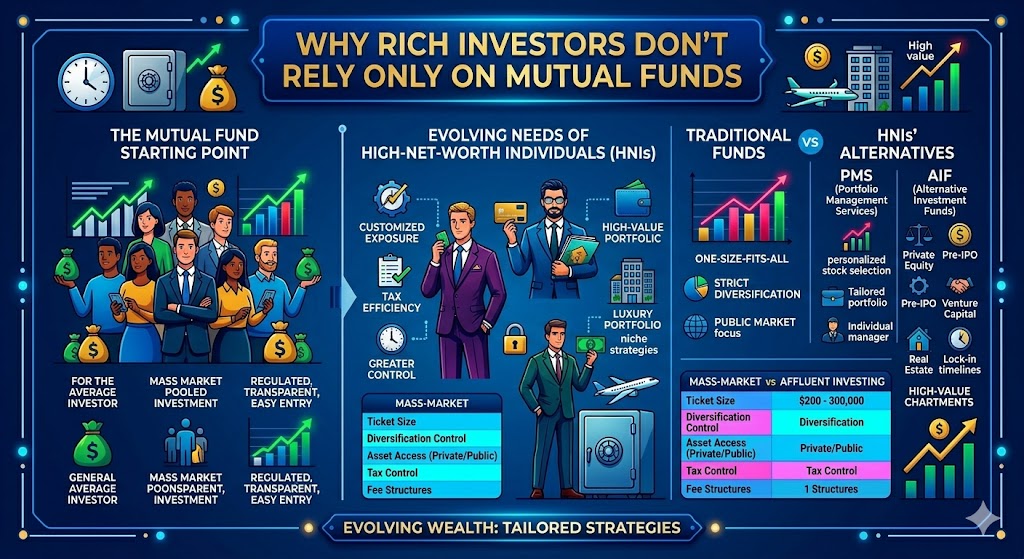
For the average investor, mutual funds are often the best starting point for wealth creation. However, as investors accumulate significant wealth, their financial needs evolve. High-net-worth individuals (HNIs) often move beyond traditional mutual funds to access strategies that offer more control, tax efficiency, and customized exposure.
If you are wondering why the wealthy look for alternatives like PMS or AIF, it’s not just about returns—it’s about the limitations of pooled investment structures.
📖 Read More
The Limitations of Mutual Funds
Mutual funds are built for the masses. While they are regulated and transparent, they come with certain “one-size-fits-all” constraints that don’t always align with the goals of wealthy individuals.
Why HNIs Seek Alternatives
1. Customization and Control
In a mutual fund, you hold units of a scheme managed by a fund manager. You have no say in which stocks are bought or sold. With Portfolio Management Services (PMS), investors can often request to exclude specific sectors or companies based on personal ethics or existing holdings.
2. Tax Efficiency
Mutual funds often trigger capital gains taxes even if the investor hasn’t sold their own units (due to churn within the fund). Sophisticated structures like AIFs or direct equity portfolios offer better control over tax liability by allowing investors to time their exits more effectively.
3. Concentration vs. Diversification
Mutual funds are strictly regulated to avoid over-concentration in a few stocks. While this reduces risk for small investors, wealthy investors who have high conviction in a specific business model may prefer a concentrated portfolio that can deliver superior alpha.
4. Access to Private Markets
Mutual funds are generally restricted to publicly traded securities. Wealthy investors want access to private equity, pre-IPO deals, and venture capital—opportunities that are only available through Alternative Investment Funds (AIF).
Key Differences at a Glance
- Mutual Funds: Pooled, standardized, low ticket size, high liquidity.
- PMS/AIF: Personalized, niche strategies, high ticket size, controlled liquidity.
Final Thoughts
Moving beyond mutual funds is not about abandoning them; it is about portfolio evolution. As your corpus grows, your strategy must move from ‘general growth’ to ‘tailored wealth management.’
Disclaimer: This content is for educational purposes only and does not constitute investment advice. Investments in financial products are subject to market risks. Please consult a SEBI-registered investment advisor before making any financial decisions.