How to Create Multiple Sources of Income

Posted on June 14, 2026 by admin

How to Create Multiple Sources of Income

In today’s uncertain economy, depending on a single
source of income can be risky. Creating multiple income streams helps improve financial security, build
wealth faster, and achieve long-term financial freedom.

The wealthiest individuals rarely depend on one
income source. Instead, they build multiple streams that work together to generate consistent cash flow
and financial stability.

πŸ“– Read More

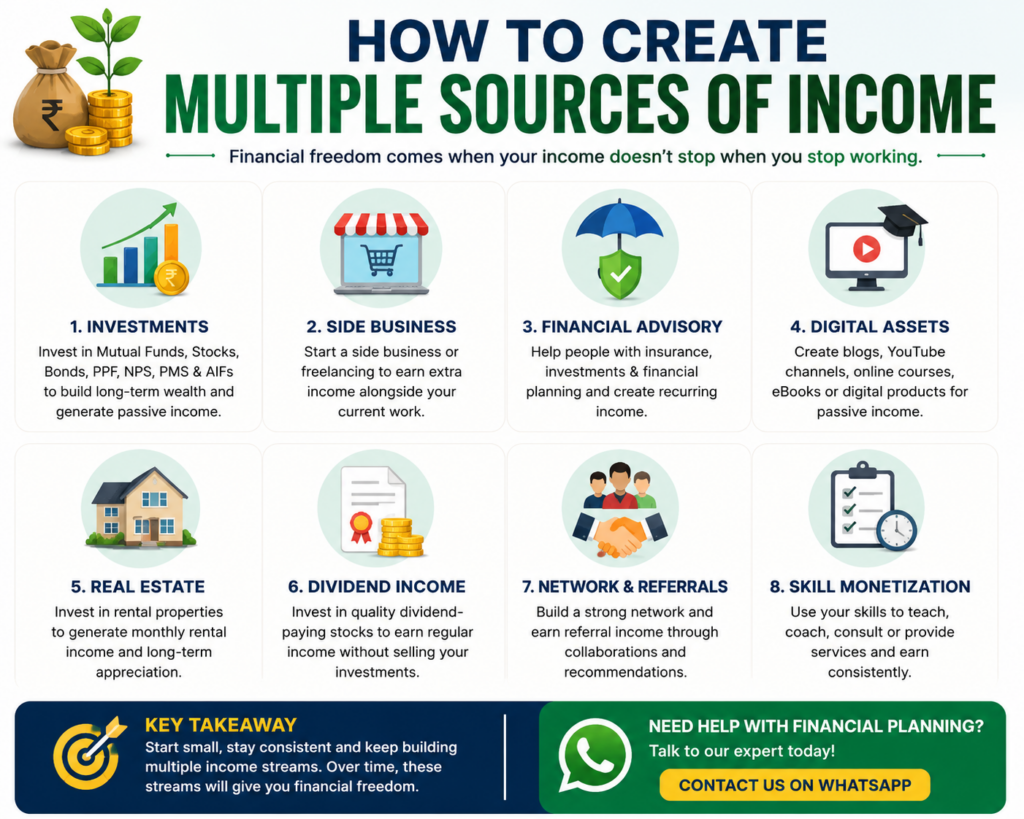
1. Build an Investment Portfolio

Invest regularly through SIPs, Mutual Funds, Stocks, PMS,
AIFs, and Bonds. Investments can create passive income and long-term wealth through compounding.

2. Start a Side Business

A side business can generate additional income beyond your primary
job or profession. Online services, consulting, freelancing, and e-commerce are popular options.

3. Generate Insurance & Financial Advisory Income

Helping people with insurance,
retirement planning, wealth creation, and investment solutions can create recurring income opportunities
while adding value to clients.

4. Create Digital Assets

Blogs, YouTube channels, online courses, digital products, and
eBooks can continue generating income long after they are created.

5. Earn Rental Income

Real estate investments can provide monthly rental income while also
benefiting from long-term property appreciation.

6. Build Dividend Income

Investing in quality dividend-paying companies can generate a
regular income stream without selling your investments.

7. Referral & Network Income

Building a strong professional network can create referral
based income opportunities and open doors to multiple business ventures.

Examples of Multiple Income Streams

1

  • βœ” Salary or Business Income
  • βœ” Mutual Fund SIP Income Growth
  • βœ” Stock Market
    Investments
  • βœ” Rental Property Income
  • βœ” Insurance Advisory Income
  • βœ” Financial
    Consulting Income
  • βœ” Dividend Income
  • βœ” Online Business Income

Benefits of Multiple Sources of Income

  • βœ” Better Financial Security
  • βœ” Reduced Dependence on One Income Source
  • βœ” Faster
    Wealth Creation
  • βœ” Protection During Economic Uncertainty
  • βœ” Greater Financial Freedom
  • βœ” Early Retirement Possibilities

Simple Strategy to Get Started

  1. Create an Emergency Fund
  2. Start Monthly SIP Investments
  3. Develop a Side Business
    or Skill
  4. Invest in Long-Term Assets
  5. Reinvest Extra Income for Growth

Final Thoughts

Creating multiple income sources is one of the smartest financial decisions you can make. Start with
one additional income stream, stay consistent, and gradually expand your portfolio of income-generating
assets. Over time, these streams can help you achieve financial independence and long-term wealth.
What Happens If You Delay Retirement Planning?

Posted on June 12, 2026 by admin

What Happens If You Delay Retirement Planning?

Retirement planning is one of the most important parts of financial life. However, many people delay it thinking they still have enough time. This delay can significantly impact long-term financial security and lifestyle.

The earlier you start, the easier it becomes to build wealth. But when you delay retirement planning, you lose the most powerful financial toolβ€”compounding.


πŸ“– Read More

1. Loss of Compounding Power

The biggest disadvantage of delaying retirement planning is the loss of compounding benefits. Money invested early grows exponentially over time, while late investments require much higher contributions.

2. Increased Financial Burden

If you start late, you will need to invest a much larger amount every month to achieve the same retirement goal. This can create pressure on your current lifestyle and cash flow.

3. Risk of Insufficient Retirement Corpus

Delaying planning increases the risk of not accumulating enough wealth for retirement. This may lead to financial dependence in later years.

4. Higher Investment Risk

Late investors often take higher risks to catch up on missed time. This can expose savings to unnecessary market volatility.

5. Reduced Financial Freedom

Without proper retirement planning, you may have to compromise on your desired lifestyle, travel plans, or healthcare needs after retirement.

Example

  • If you start SIP at age 25 β†’ Small monthly investment needed
  • If you start at age 40 β†’ 3x–5x higher investment required

Benefits of Starting Early

  • βœ” Maximum compounding advantage
  • βœ” Lower monthly investment pressure
  • βœ” Better financial discipline
  • βœ” Stress-free retirement life

Final Thoughts

Delaying retirement planning may seem harmless today, but it creates serious financial pressure in the future. The best time to start is always β€œnow,” no matter your age.

Goal-Based Investing: The Smart Way to Build Wealth

Posted on June 10, 2026 by admin

Goal-Based Investing: The Smart Way to Build Wealth

Many people invest without a clear purpose, hoping their money will grow over time. However, successful investors understand that every investment should be linked to a specific financial goal.

Goal-Based Investing is a smart strategy that helps you align your investments with your life goals, making it easier to stay disciplined and achieve financial success.


πŸ“– Read More

What is Goal-Based Investing?

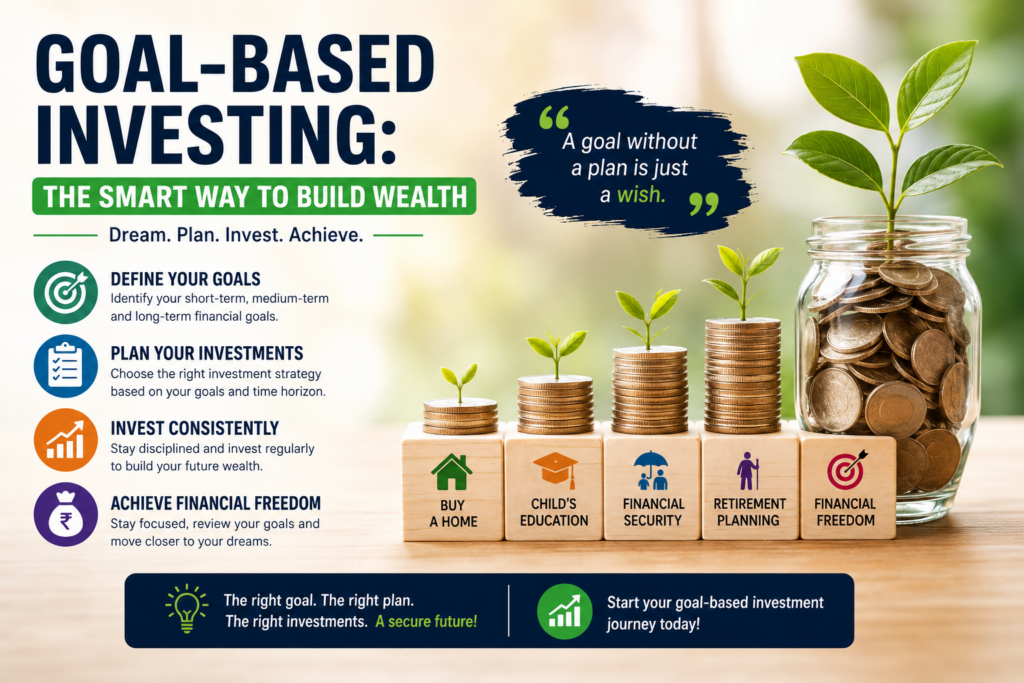
Goal-Based Investing is an investment approach where you invest with a specific objective in mind rather than simply chasing returns. Each investment is linked to a financial goal such as buying a house, funding your child’s education, planning for retirement, building an emergency fund, or achieving financial freedom.

Instead of asking, “Which investment gives the highest return?” Goal-Based Investing encourages you to ask, “What am I investing for, and when will I need the money?”

Why Goal-Based Investing Matters

Many investors make emotional decisions during market ups and downs. Without a clear goal, they may stop investing, withdraw money too early, or take unnecessary risks.

Having clearly defined goals provides direction and helps investors remain focused even during periods of market volatility.

  • βœ” Provides financial clarity
  • βœ” Encourages disciplined investing
  • βœ” Helps manage investment risk
  • βœ” Improves long-term wealth creation
  • βœ” Keeps emotions out of investment decisions

Types of Financial Goals

Short-Term Goals (1-3 Years)

  • Emergency Fund
  • Vacation Planning
  • Buying a Vehicle
  • Wedding Expenses

Medium-Term Goals (3-7 Years)

  • Home Down Payment
  • Business Expansion
  • Child’s School Education
  • Professional Courses

Long-Term Goals (7+ Years)

  • Retirement Planning
  • Child Higher Education
  • Wealth Creation
  • Financial Freedom

How Goal-Based Investing Works

The process begins by identifying your financial goals and estimating how much money you will need in the future. Once the target amount and timeline are determined, you can calculate how much you need to invest regularly.

For example:

  • Goal: Child Education
  • Time Horizon: 15 Years
  • Target Corpus: β‚Ή50 Lakhs
  • Investment Strategy: Monthly SIP in Equity Mutual Funds

By investing consistently and reviewing progress periodically, investors can steadily move toward their financial objectives.

Benefits of Goal-Based Investing

  • βœ” Better Financial Planning
  • βœ” Increased Investment Discipline
  • βœ” Improved Risk Management
  • βœ” Higher Probability of Achieving Goals
  • βœ” Greater Confidence During Market Fluctuations
  • βœ” Structured Wealth Creation

Common Mistakes to Avoid

  • ❌ Investing without clear goals
  • ❌ Choosing investments based only on recent performance
  • ❌ Ignoring inflation while calculating future needs
  • ❌ Stopping SIPs during market corrections
  • ❌ Not reviewing goals periodically
  • ❌ Taking excessive investment risks

Goal-Based Investing and Mutual Funds

Mutual Funds are among the most effective tools for Goal-Based Investing because they offer flexibility, diversification, and the ability to invest through SIPs. Different categories of funds can be selected based on the time horizon and risk profile of each goal.

For long-term goals, equity mutual funds can help generate inflation-beating returns, while debt-oriented investments may be suitable for short-term objectives.

Final Thoughts

Wealth creation is not about investing randomly or chasing the highest returns. It is about having a clear destination and choosing the right path to reach it.

Goal-Based Investing provides a structured framework that helps investors make informed decisions, stay committed to their plans, and achieve financial goals with confidence. Whether your dream is buying a home, funding your child’s future, or retiring comfortably, a goal-based investment strategy can help turn those dreams into reality.

Top Financial Mistakes Young Professionals Make

Posted on by admin

Top Financial Mistakes Young Professionals Make

Starting your career is exciting, but it also comes with important financial decisions. Unfortunately, many young professionals make mistakes that can impact their long-term financial health and wealth creation.

Understanding these common financial mistakes early can help you build a strong financial foundation, avoid unnecessary debt, and achieve your future goals faster.


πŸ“– Read More

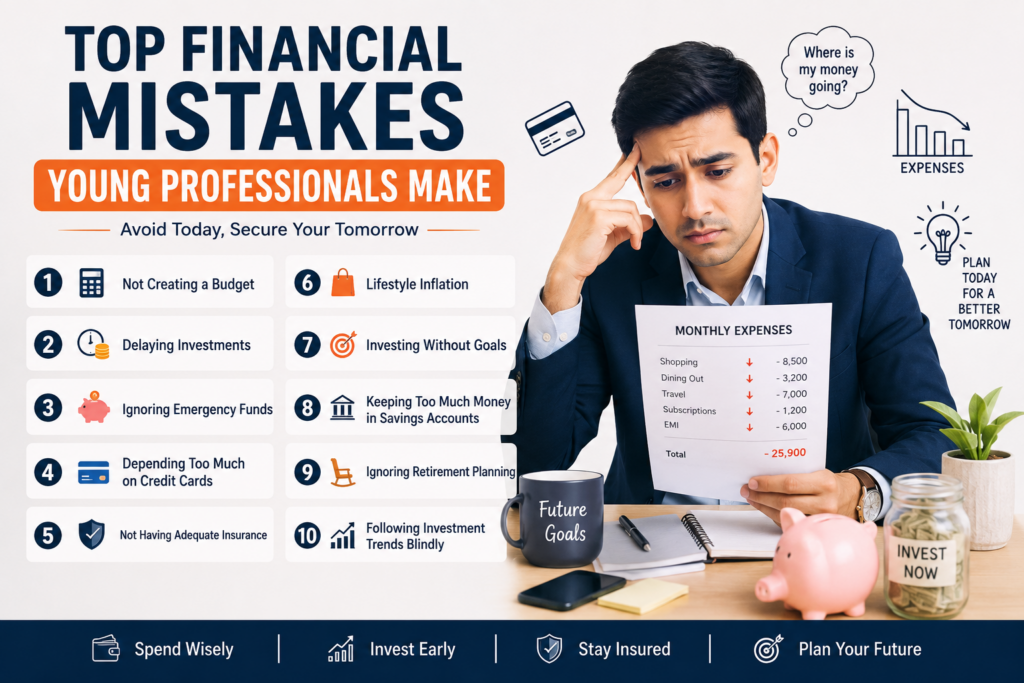
1. Not Creating a Budget

One of the biggest mistakes young professionals make is spending money without tracking income and expenses. A proper budget helps you understand where your money is going and ensures you save consistently.

2. Delaying Investments

Many people wait for the “right time” to start investing. However, delaying investments means losing the benefits of compounding. Even small SIP investments started early can create significant wealth over time.

3. Ignoring Emergency Funds

Unexpected expenses such as medical emergencies, job loss, or urgent repairs can create financial stress. An emergency fund covering at least 6 months of expenses is essential.

4. Depending Too Much on Credit Cards

Credit cards can be useful, but excessive usage and unpaid balances can lead to high-interest debt. Always use credit responsibly and pay dues on time.

5. Not Having Adequate Insurance

Many young professionals ignore health and life insurance because they believe they are healthy. A medical emergency can quickly drain savings if proper insurance coverage is not in place.

6. Lifestyle Inflation

As income increases, spending often increases too. Upgrading cars, gadgets, and lifestyle unnecessarily can reduce your ability to save and invest for the future.

7. Investing Without Goals

Investments should always be linked to financial goals such as buying a home, retirement planning, children’s education, or financial independence.

8. Keeping Too Much Money in Savings Accounts

While savings accounts provide liquidity, they generally offer low returns that may not beat inflation. Excess funds should be invested according to your risk profile and goals.

9. Ignoring Retirement Planning

Retirement may seem far away, but starting early gives your investments more time to grow. Even small contributions today can create a substantial retirement corpus.

10. Following Investment Trends Blindly

Many investors make decisions based on social media trends or market hype. Always research thoroughly and invest according to your risk tolerance and financial objectives.

How to Avoid These Mistakes

  • βœ” Create a monthly budget
  • βœ” Start SIP investments early
  • βœ” Build an emergency fund
  • βœ” Maintain adequate insurance coverage
  • βœ” Define clear financial goals
  • βœ” Invest regularly and stay disciplined
  • βœ” Review your portfolio periodically

Final Thoughts

Financial success is not about earning a high salary alone. It is about making smart financial decisions consistently. Avoiding these common mistakes can help young professionals build wealth, achieve financial freedom, and enjoy long-term financial security.

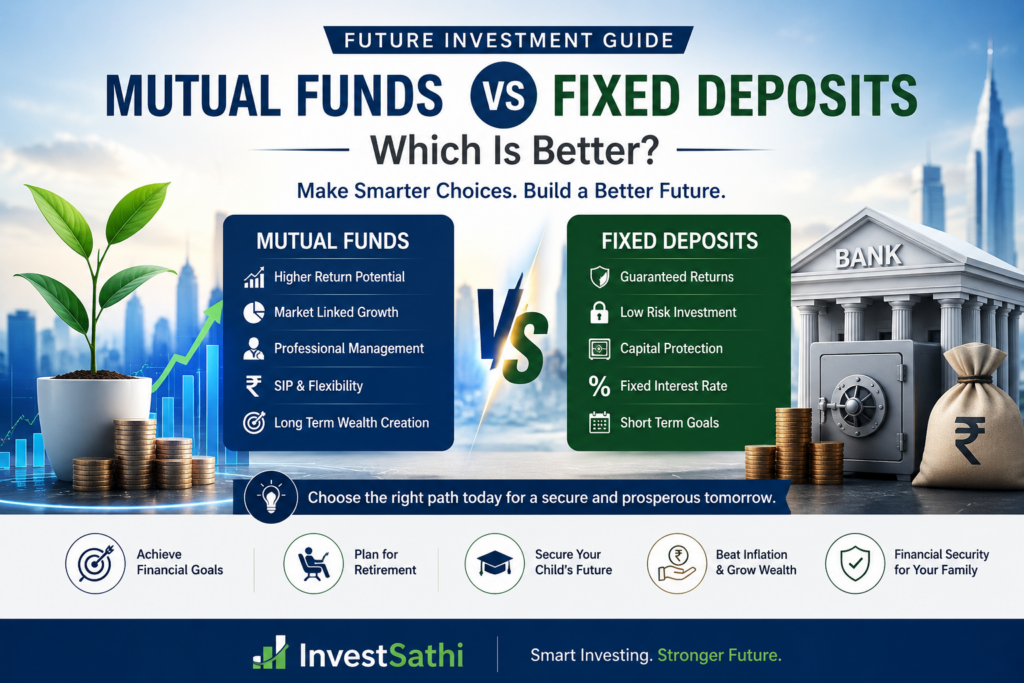
Mutual Funds vs Fixed Deposits: Which Investment Option Is Better in 2026?

Posted on by admin

Mutual Funds vs Fixed Deposits: Which Is Better for Your Money?

When it comes to saving and growing money, most investors face a common question:
Should I invest in Mutual Funds or keep my money in Fixed Deposits (FDs)?

Both investment options have their own advantages and are designed for different financial goals.


πŸ“– Read More

Introduction

The right choice depends on your risk appetite, investment horizon, and wealth creation objectives.
Let’s compare Mutual Funds and Fixed Deposits to help you make an informed decision.

What is a Fixed Deposit (FD)?

A Fixed Deposit is a savings instrument offered by banks and financial institutions where you invest a lump sum amount for a fixed period and earn a predetermined rate of interest.

Key Features of FDs:

  • βœ” Guaranteed returns
  • βœ” Fixed tenure
  • βœ” Low risk
  • βœ” Capital protection
  • βœ” Suitable for conservative investors

What is a Mutual Fund?

A Mutual Fund pools money from multiple investors and invests it in stocks, bonds, gold, or other assets. Professional fund managers manage the investments to generate returns.

Key Features of Mutual Funds:

  • βœ” Market-linked returns
  • βœ” Professional management
  • βœ” Diversification
  • βœ” Suitable for long-term wealth creation
  • βœ” Multiple categories available

Mutual Funds vs Fixed Deposits: A Detailed Comparison

Parameter Fixed Deposit Mutual Fund
Risk Very Low Moderate to High
Returns Fixed Market Linked
Wealth Creation Potential Limited High
Inflation Protection Low Better
Liquidity Moderate High
Tax Efficiency Lower Higher

Returns Comparison

Let’s compare β‚Ή10,00,000 invested for 15 years:

Fixed Deposit (7% Return)
Future Value β‰ˆ β‚Ή27.6 Lakhs

Mutual Fund (12% Return)
Future Value β‰ˆ β‚Ή54.7 Lakhs

The difference is significant because Mutual Funds benefit from the power of compounding and potentially higher returns over the long term.

Inflation: The Hidden Wealth Killer

Suppose inflation averages 6% per year. If your FD earns 7%, your real return is only around 1%.
However, diversified equity mutual funds have historically delivered returns that often exceed inflation over long periods.

When Fixed Deposits Are Better

  • Capital protection
  • Investment horizon less than 3 years
  • Cannot tolerate market fluctuations
  • Need predictable income
  • Emergency fund creation

When Mutual Funds Are Better

  • Long-term wealth creation
  • Investment horizon 5 years or more
  • Want to beat inflation
  • Retirement planning
  • Child education planning
  • Future financial goals

Can You Invest in Both?

Absolutely! A balanced financial plan often includes both.

Fixed Deposits For:

  • Emergency funds
  • Short-term goals
  • Capital safety

Mutual Funds For:

  • Wealth creation
  • Retirement planning
  • Child education
  • Long-term financial freedom

Final Verdict

Choose Fixed Deposits If:

  • βœ” Safety is your highest priority
  • βœ” You need guaranteed returns
  • βœ” Investment period is short

Choose Mutual Funds If:

  • βœ” You want higher long-term returns
  • βœ” You want to beat inflation
  • βœ” You are building wealth for future goals

For most investors, Mutual Funds are generally a better choice for long-term wealth creation, while Fixed Deposits are better for capital preservation and short-term needs.