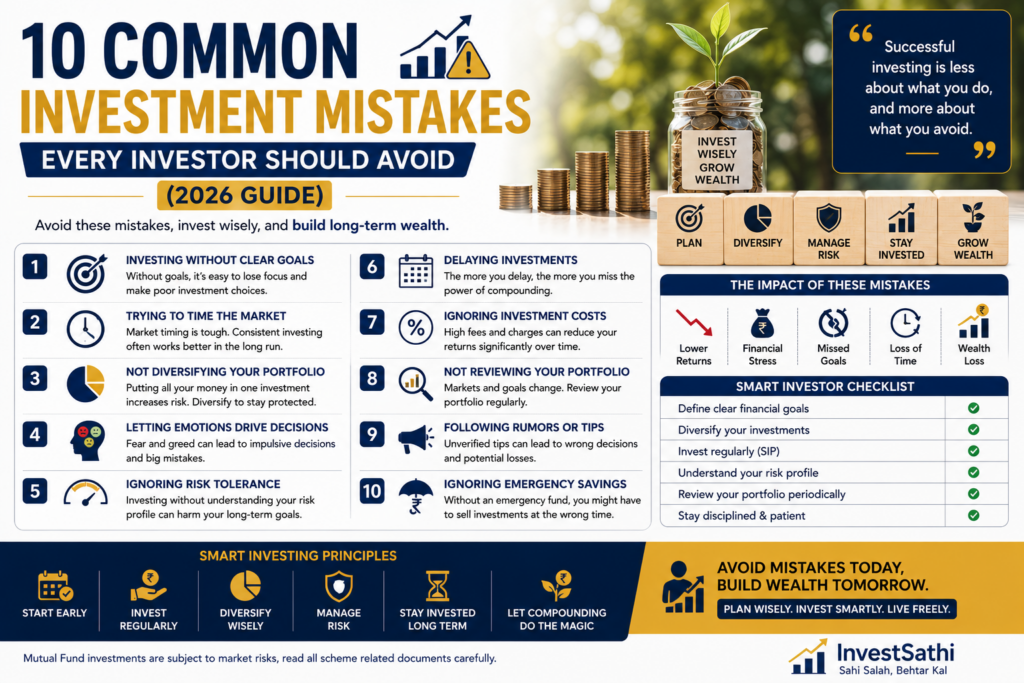
⚠️ 10 Common Investment Mistakes Every Investor Should Avoid (2026 Guide)
Successful investing is not just about choosing the right investment—it is also about avoiding costly mistakes. Many investors lose money because of emotional decisions, poor planning, unrealistic expectations, or lack of diversification.
In this complete 2026 guide, you’ll discover the 10 most common investment mistakes and learn practical strategies to avoid them for long-term wealth creation.
📖 Read Complete Guide
1. Investing Without Clear Financial Goals
Investing without defining your financial objectives can lead to poor investment decisions. Always identify whether your goal is retirement, child education, buying a house, or wealth creation.
2. Trying to Time the Market
Waiting for the “perfect time” to invest often causes investors to miss long-term growth opportunities. Consistent investing is generally more effective than attempting to predict market movements.
3. Not Diversifying Your Portfolio
Putting all your money into a single investment or asset class increases risk. Diversifying across suitable investments can help reduce overall portfolio risk.
4. Letting Emotions Drive Decisions
Fear during market declines and greed during market rallies often lead to poor investment choices. Stick to your financial plan instead of reacting emotionally.
5. Ignoring Risk Tolerance
Choose investments that match your financial goals, investment horizon, and ability to handle market fluctuations.
6. Delaying Investments
Starting early allows your investments more time to potentially benefit from compounding.
7. Ignoring Investment Costs
Expense ratios, brokerage charges, and taxes can affect long-term returns. Compare costs before investing.
8. Not Reviewing Your Portfolio
Review your portfolio periodically to ensure it continues to align with your financial goals and risk profile.
9. Following Rumors or Tips
Avoid making investment decisions based solely on social media, friends, or unverified market tips. Always research before investing.
10. Ignoring Emergency Savings
An emergency fund can help cover unexpected expenses without forcing you to sell long-term investments at an unfavorable time.
Investment Checklist
| Checklist | Status |
|---|---|
| Set Financial Goals | ☐ |
| Build Emergency Fund | ☐ |
| Diversify Investments | ☐ |
| Review Portfolio Annually | ☐ |
| Invest Regularly | ☐ |
Frequently Asked Questions (FAQs)
Q1. What is the biggest investment mistake?
Investing without clear financial goals or a long-term plan is one of the most common mistakes.
Q2. Should I stop investing during market falls?
Investment decisions should be based on your financial plan, goals, and risk tolerance rather than short-term market movements.
Q3. How often should I review my investments?
Review your portfolio at least once a year or after major life events.
Q4. Why is diversification important?
Diversification helps spread risk across different investments, reducing the impact of poor performance from any single asset.
Key Takeaway
Successful investing is built on discipline, diversification, patience, and a well-defined financial plan. Avoiding common mistakes can be just as important as selecting the right investments.
Disclaimer: This article is for educational purposes only and should not be considered financial, tax, or investment advice. Investments are subject to market risks. Please read all scheme-related documents carefully before investing.