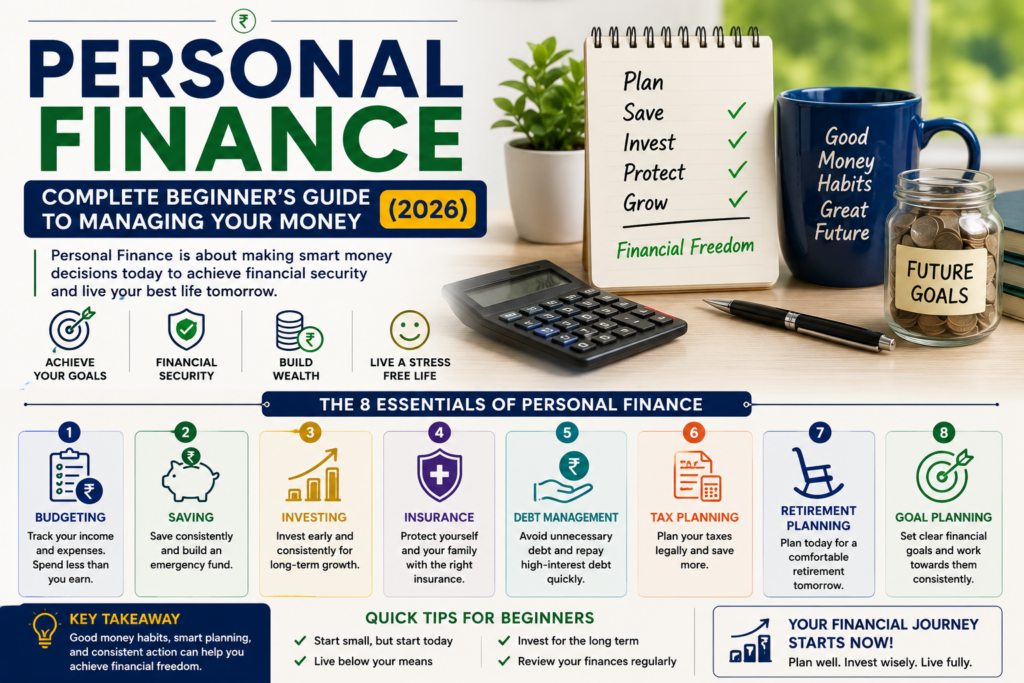
💰 Personal Finance: Complete Beginner’s Guide to Managing Your Money (2026)
Personal Finance is the process of managing your income, expenses, savings, investments, insurance, taxes, and retirement planning to achieve financial security and long-term wealth creation. Good financial planning helps you meet life goals while reducing financial stress.
In this complete 2026 guide, you’ll learn the fundamentals of Personal Finance, budgeting, saving, investing, debt management, insurance, retirement planning, and practical tips to build long-term financial success.
📖 Read Complete Guide
1. What is Personal Finance?
Personal Finance refers to managing your financial resources wisely to meet both short-term and long-term goals. It includes budgeting, saving, investing, insurance planning, tax planning, and retirement planning.
2. The Five Pillars of Personal Finance
- 💵 Budgeting
- 💰 Saving
- 📈 Investing
- 🛡 Insurance Planning
- 🏖 Retirement Planning
3. Why Personal Finance Matters
| Benefit | Explanation |
|---|---|
| Financial Security | Helps prepare for emergencies and unexpected expenses. |
| Goal Achievement | Supports goals like buying a house, children’s education, and retirement. |
| Wealth Creation | Disciplined investing can help build long-term wealth. |
| Stress Reduction | Better financial planning can reduce money-related stress. |
4. Key Components
- ✅ Monthly Budget
- ✅ Emergency Fund
- ✅ Health Insurance
- ✅ Life Insurance
- ✅ Mutual Fund SIPs
- ✅ Retirement Planning
- ✅ Tax Planning
- ✅ Debt Management
5. Common Financial Mistakes
- ❌ Spending more than you earn.
- ❌ Not maintaining an emergency fund.
- ❌ Delaying investments.
- ❌ Depending only on savings accounts.
- ❌ Ignoring insurance.
- ❌ Taking unnecessary loans.
6. Personal Finance Checklist
| Task | Status |
|---|---|
| Create Monthly Budget | ☐ |
| Build Emergency Fund | ☐ |
| Buy Health Insurance | ☐ |
| Start SIP Investment | ☐ |
| Review Financial Goals | ☐ |
Frequently Asked Questions (FAQs)
Q1. What is Personal Finance?
It is the process of managing income, expenses, savings, investments, insurance, taxes, and retirement planning.
Q2. How much should I save?
The amount depends on your income, expenses, and financial goals. A consistent saving habit is generally beneficial.
Q3. Is investing necessary?
Investing may help grow wealth over the long term, but investment choices should match your goals and risk tolerance.
Q4. Why is an emergency fund important?
It can help cover unexpected expenses without disrupting your long-term financial plans.
Key Takeaway
Strong personal finance habits—budgeting, saving, investing wisely, managing debt, and maintaining adequate insurance—can help you build long-term financial security and work toward your life goals.
Disclaimer: This article is for educational purposes only and should not be considered financial, tax, or investment advice. Investments are subject to market risks. Consult a qualified financial advisor before making investment decisions.