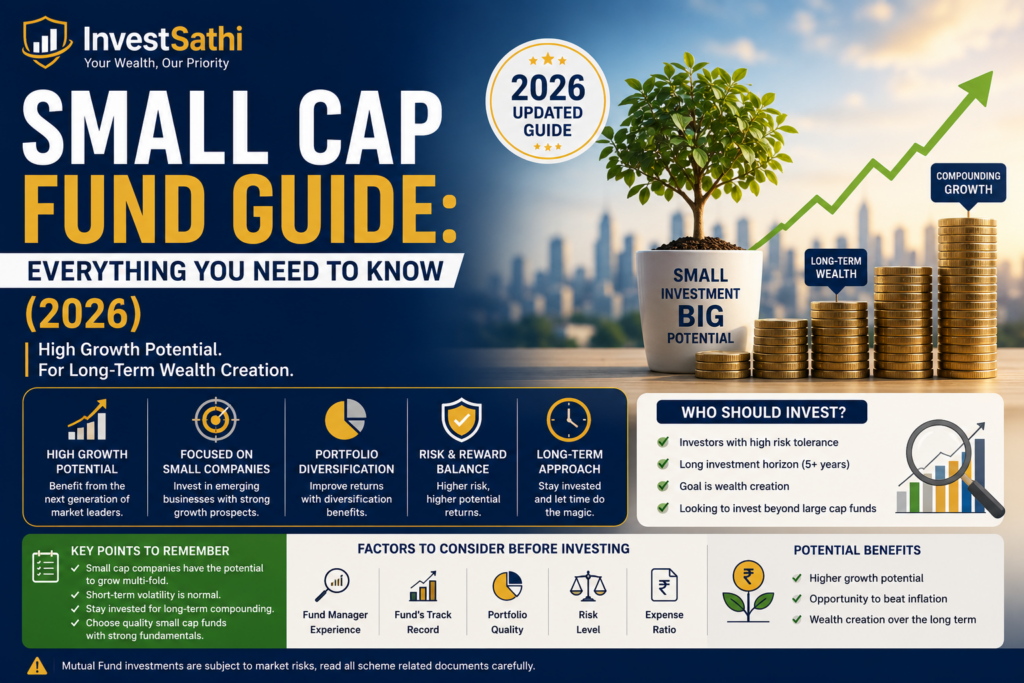
🚀 Small Cap Fund Guide: Everything You Need to Know (2026)
Small Cap Mutual Funds invest primarily in companies with relatively smaller market capitalization. These companies often have higher growth potential but may also experience greater price volatility compared to large-cap companies. Small Cap Funds are generally considered by investors seeking long-term capital appreciation.
In this complete guide, you’ll learn how Small Cap Funds work, their benefits, risks, who should consider them, and key factors to evaluate before investing.
📖 Read Complete Guide
1. What is a Small Cap Fund?
A Small Cap Mutual Fund primarily invests in equity shares of companies that fall within the small-cap segment as defined by SEBI. These companies are generally in the early stages of growth and may offer higher growth opportunities over the long term, although they can also be more volatile.
2. Key Features of Small Cap Funds
- 📈 High long-term growth potential.
- 🏢 Invest mainly in small-cap companies.
- ⚠ Higher market volatility compared to large-cap funds.
- ⏳ Better suited for long investment horizons.
- 💼 Professionally managed portfolio.
3. Benefits of Investing in Small Cap Funds
| Benefit | Description |
|---|---|
| Higher Growth Potential | Emerging companies may grow significantly over time. |
| Long-Term Wealth Creation | Suitable for long-term investment goals. |
| Professional Fund Management | Experienced fund managers select investments. |
| Portfolio Diversification | Provides exposure to a different segment of the equity market. |
4. Risks of Small Cap Funds
- ⚠ Higher short-term volatility.
- 📉 Greater impact during market corrections.
- 💹 Returns may fluctuate significantly.
- ⏳ Patience is important for long-term investing.
- 📊 Performance depends on market conditions and fund management.
5. Who Should Consider Small Cap Funds?
- ✅ Investors with a long investment horizon.
- ✅ Investors comfortable with higher market volatility.
- ✅ Individuals seeking long-term capital appreciation.
- ✅ Investors looking to diversify an equity portfolio.
6. Small Cap Fund vs Large Cap Fund
| Feature | Small Cap Fund | Large Cap Fund |
|---|---|---|
| Growth Potential | Higher | Moderate |
| Risk | Higher | Lower |
| Volatility | Higher | Lower |
| Investment Horizon | Long Term | Medium to Long Term |
7. Common Mistakes to Avoid
- ❌ Expecting quick profits.
- ❌ Investing without understanding the risks.
- ❌ Panic selling during market declines.
- ❌ Ignoring diversification.
- ❌ Investing without financial goals.
Frequently Asked Questions (FAQs)
Q1. Are Small Cap Funds risky?
Small Cap Funds generally involve higher market risk and volatility compared to Large Cap Funds because they invest in smaller companies.
Q2. What is the ideal investment horizon?
A longer investment horizon is generally considered more suitable for Small Cap Funds due to their potential volatility.
Q3. Can I invest through SIP?
Yes. Many investors use SIPs to invest regularly in Small Cap Funds.
Q4. Are returns guaranteed?
No. Mutual Fund returns are market-linked and not guaranteed.
Key Takeaway
Small Cap Funds can offer attractive long-term growth potential, but they also come with higher volatility. Investors should evaluate their financial goals, investment horizon, and risk tolerance before investing.
Final Thoughts
Small Cap Mutual Funds can play an important role in a diversified investment portfolio for investors seeking long-term capital appreciation. However, they are generally better suited for those who can stay invested through market fluctuations and review their portfolio periodically.
Disclaimer: This article is for educational purposes only and should not be considered financial or investment advice. Mutual Fund investments are subject to market risks. Please read all scheme-related documents carefully before investing.