📊 Best Asset Allocation Strategy: Build a Balanced Investment Portfolio (2026 Guide)
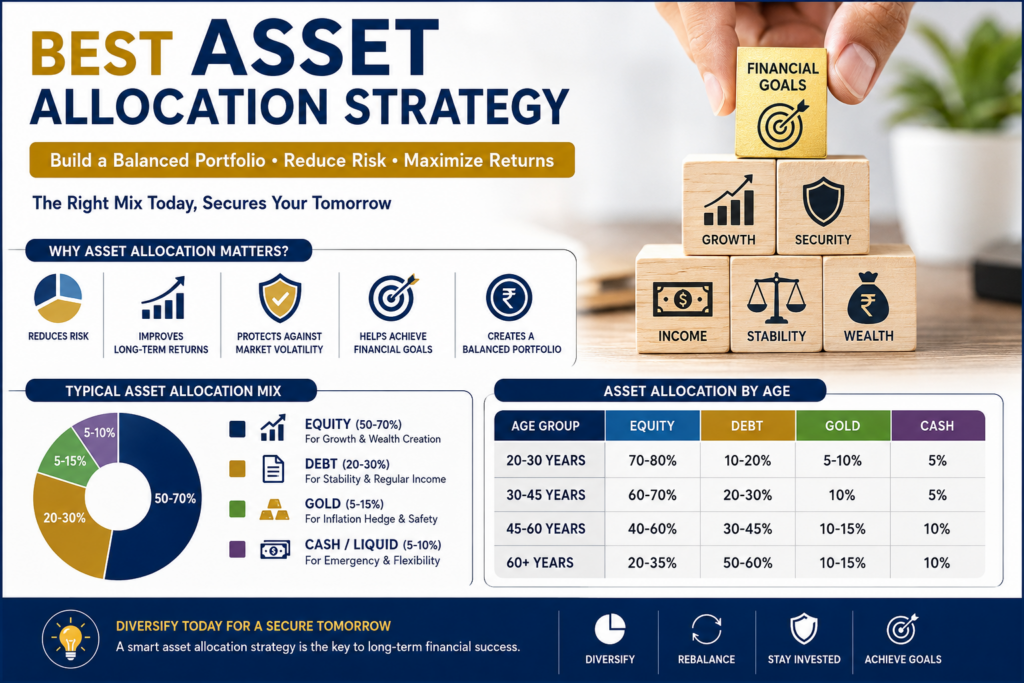
Asset Allocation is one of the most important factors in successful investing. Instead of putting all your money into one investment, a proper asset allocation strategy spreads your investments across different asset classes like Equity, Debt, Gold, and Cash to balance risk and maximize long-term returns.
In this complete guide, you’ll learn what asset allocation is, why it matters, how to choose the right allocation based on your age and goals, and common mistakes to avoid.
📖 Read Complete Guide
1. What is Asset Allocation?
Asset Allocation is the process of dividing your investment portfolio among different asset classes such as Equity, Debt, Gold, REITs, International Funds, and Cash. The objective is to reduce overall portfolio risk while achieving your financial goals.
2. Why is Asset Allocation Important?
- ✅ Reduces overall investment risk.
- ✅ Improves long-term returns.
- ✅ Protects your portfolio during market volatility.
- ✅ Helps achieve financial goals systematically.
- ✅ Creates a diversified investment portfolio.
3. Common Asset Classes
| Asset Class | Purpose | Risk Level |
|---|---|---|
| Equity Mutual Funds | Long-Term Growth | High |
| Debt Funds | Stable Income | Low to Moderate |
| Gold | Inflation Hedge | Moderate |
| Cash / Liquid Funds | Emergency Needs | Very Low |
| International Funds | Global Diversification | Moderate to High |
4. Suggested Asset Allocation by Age
| Age Group | Equity | Debt | Gold | Cash |
|---|---|---|---|---|
| 20-30 Years | 70-80% | 10-20% | 5-10% | 5% |
| 30-45 Years | 60-70% | 20-30% | 10% | 5% |
| 45-60 Years | 40-60% | 30-45% | 10-15% | 10% |
| 60+ Years | 20-35% | 50-60% | 10-15% | 10% |
5. Benefits of Proper Asset Allocation
- ✅ Better Risk Management
- ✅ Consistent Long-Term Returns
- ✅ Reduced Portfolio Volatility
- ✅ Improved Financial Discipline
- ✅ Better Wealth Preservation
6. Common Mistakes to Avoid
- ❌ Investing only in Equity.
- ❌ Ignoring Debt and Gold allocation.
- ❌ Never rebalancing the portfolio.
- ❌ Following market trends blindly.
- ❌ Investing without financial goals.
7. Portfolio Rebalancing
Review your portfolio at least once every year. If one asset class grows significantly, rebalance your investments to maintain your desired asset allocation. This helps control risk and keeps your investment strategy aligned with your financial goals.
Frequently Asked Questions (FAQs)
Q1. What is the best asset allocation?
There is no single best allocation. It depends on your age, financial goals, risk tolerance, and investment horizon.
Q2. Should beginners diversify?
Yes. Diversification through proper asset allocation helps reduce investment risk.
Q3. How often should I rebalance my portfolio?
Generally, once every 6–12 months or whenever your allocation deviates significantly from your target.
Q4. Can Mutual Funds help in Asset Allocation?
Yes. Multi Asset Allocation Funds and Hybrid Funds provide diversification across multiple asset classes.
Key Takeaway
A well-diversified asset allocation strategy helps you manage risk, protect your investments during market volatility, and achieve long-term financial goals more consistently.
Final Thoughts
Successful investing isn’t about finding the hottest stock—it’s about building the right mix of assets. By diversifying across Equity, Debt, Gold, and other asset classes, you can create a resilient portfolio that supports your financial goals through different market conditions.
Disclaimer: This article is for educational purposes only and should not be considered investment advice. Mutual Fund investments are subject to market risks. Please read all scheme-related documents carefully before investing.