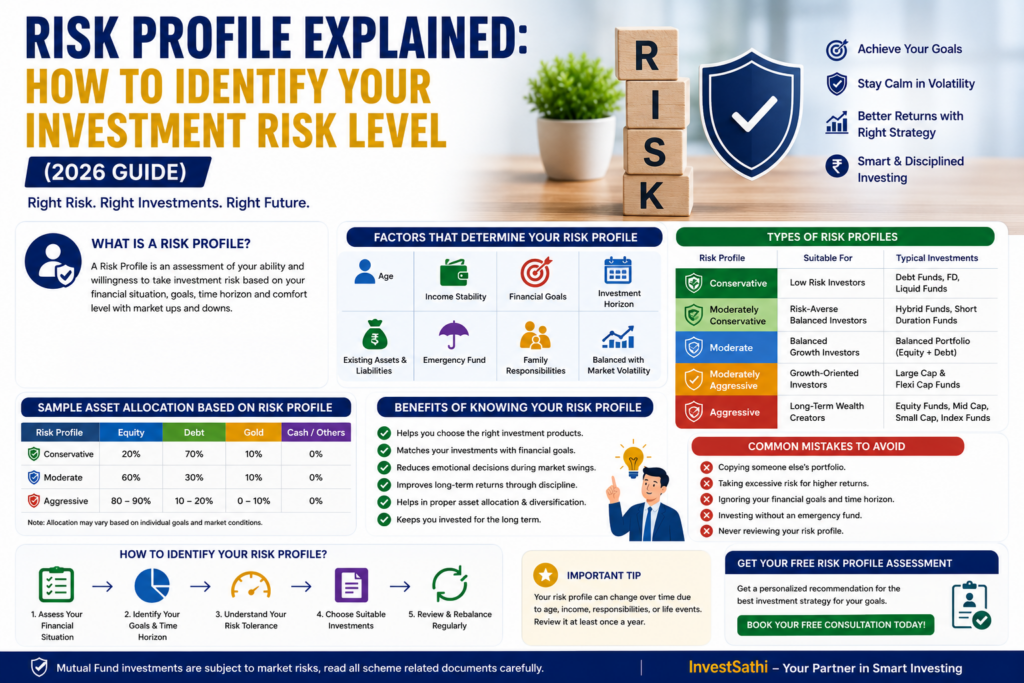
📊 Risk Profile Explained: How to Identify Your Investment Risk Level (2026 Guide)
Every investor has a different ability and willingness to take investment risk. Understanding your Risk Profile is one of the most important steps before investing in Mutual Funds, Stocks, or any other financial product. It helps you choose investments that match your financial goals, investment horizon, and comfort with market fluctuations.
In this complete guide, you’ll learn what a Risk Profile is, the different types of investors, how to identify your own risk level, and why risk profiling is essential for successful long-term investing.
📖 Read Complete Guide
1. What is a Risk Profile?
A Risk Profile is an assessment of an investor’s ability and willingness to take investment risk. It considers factors such as age, income, financial goals, investment horizon, financial responsibilities, and emotional response to market volatility.
2. Why is Risk Profiling Important?
- ✅ Helps select suitable investment products.
- ✅ Matches investments with your financial goals.
- ✅ Reduces emotional decision-making.
- ✅ Improves long-term investment discipline.
- ✅ Helps create a balanced investment portfolio.
3. Types of Investment Risk Profiles
| Risk Profile | Suitable For | Typical Investments |
|---|---|---|
| Conservative | Low Risk Investors | Debt Funds, Fixed Deposits, Liquid Funds |
| Moderately Conservative | Balanced Investors | Hybrid Funds |
| Moderate | Medium-Term Investors | Balanced Portfolio (Equity + Debt) |
| Moderately Aggressive | Growth Investors | Large Cap & Flexi Cap Funds |
| Aggressive | Long-Term Wealth Creators | Equity Funds, Mid Cap, Small Cap, Index Funds |
4. Factors That Determine Your Risk Profile
- 🎯 Financial Goals
- 👤 Age
- 💼 Income Stability
- 📅 Investment Horizon
- 💰 Existing Savings & Emergency Fund
- 🏡 Family Responsibilities
- 📉 Ability to Handle Market Losses
- 📈 Investment Experience
5. Sample Asset Allocation Based on Risk Profile
| Risk Level | Equity | Debt | Gold |
|---|---|---|---|
| Conservative | 20% | 70% | 10% |
| Moderate | 60% | 30% | 10% |
| Aggressive | 80–90% | 10–20% | Optional |
6. Benefits of Knowing Your Risk Profile
- ✅ Better investment selection.
- ✅ Improved portfolio diversification.
- ✅ Better long-term returns through suitable investments.
- ✅ Less panic during market corrections.
- ✅ Goal-based financial planning.
7. Common Mistakes to Avoid
- ❌ Copying someone else’s portfolio.
- ❌ Chasing high returns without understanding risks.
- ❌ Ignoring your financial goals.
- ❌ Investing without an emergency fund.
- ❌ Never reviewing your risk profile.
Frequently Asked Questions (FAQs)
Q1. What is an Investment Risk Profile?
It is an assessment that helps identify the level of investment risk suitable for an investor based on their financial situation and goals.
Q2. Can my Risk Profile change?
Yes. It may change due to age, income, financial responsibilities, investment experience, or changes in your financial goals.
Q3. Is a higher risk profile always better?
No. The right investment strategy depends on your financial goals and ability to handle market volatility, not simply on taking more risk.
Q4. How often should I review my Risk Profile?
At least once every year or whenever there is a significant life event such as marriage, retirement, or a major financial change.
Key Takeaway
Your Risk Profile is the foundation of a successful investment strategy. Choosing investments that match your risk tolerance can help you stay invested during market fluctuations and achieve your long-term financial goals with confidence.
Final Thoughts
Before investing in Mutual Funds or any other investment product, understand your Risk Profile. A well-planned portfolio aligned with your financial goals and risk tolerance is more likely to deliver a comfortable and disciplined investment journey.
Disclaimer: This article is for educational purposes only and should not be considered financial or investment advice. Mutual Fund investments are subject to market risks. Please read all scheme-related documents carefully before investing.