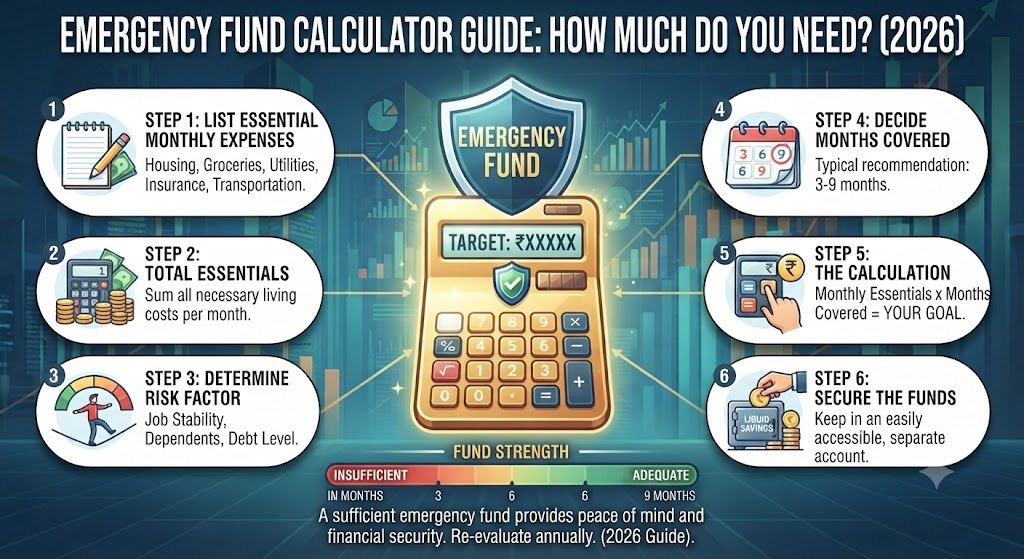
🚨 Emergency Fund Calculator Guide: How Much Emergency Fund Do You Need? (2026)
Emergency fund aapki financial planning ka ek important part hai. Unexpected medical expenses, job loss, business slowdown, urgent repairs ya other emergencies ke time par emergency fund aapko financial pressure manage karne mein help kar sakta hai.
Is guide mein hum simple formula ke through calculate karenge ki aapko kitna emergency fund maintain karna chahiye aur apne target tak kaise pahunch sakte hain.
📖 Read Complete Emergency Fund Calculator Guide
What is an Emergency Fund?
Emergency fund ek separate financial reserve hota hai jo unexpected aur urgent expenses ko manage karne ke liye rakha jata hai.
- 🚨 Unexpected medical expenses
- 💼 Temporary loss of income
- 🏠 Urgent home repairs
- 🚗 Unexpected vehicle repairs
- 👨👩👧 Family emergencies
- 📉 Temporary income disruption
💡 Emergency Fund Ka Purpose Return Kamana Nahi, Financial Emergency Mein Liquidity Provide Karna Hai.
How Much Emergency Fund Should You Have?
Emergency fund ka required amount har person ke liye same nahi hota. Ek practical starting point ke liye aap apne essential monthly expenses ko multiple months se multiply kar sakte hain.
🧮 Emergency Fund = Monthly Essential Expenses × Number of Months
Kitne months ka reserve appropriate hai, yeh income stability, dependents, debt, job/business nature aur personal circumstances par depend karta hai.
Step 1 – Calculate Your Essential Monthly Expenses
Emergency fund calculate karte waqt har expense ko include karna zaroori nahi hai. Sabse pehle essential expenses identify karein.
- 🏠 Rent / Essential Home Expenses
- 🍲 Groceries & Basic Food
- 💡 Electricity, Water & Utilities
- 🚗 Essential Transportation
- 🏥 Essential Healthcare Expenses
- 🏦 EMI / Necessary Loan Payments
- 📚 Essential Education Expenses
- 📱 Basic Communication Expenses
Entertainment, luxury shopping, vacations aur other discretionary expenses ko emergency fund calculation mein generally priority nahi di jati.
Step 2 – Choose Your Emergency Fund Months
Aap apni financial situation ke according emergency fund ka target decide kar sakte hain.
| Situation | Possible Approach |
|---|---|
| Stable Income & Lower Responsibilities | Lower end of the reserve range may be considered |
| Family with Regular Responsibilities | Higher reserve may be appropriate |
| Variable Income / Business | Larger emergency reserve may be useful |
| High Debt / EMI Obligations | Consider stronger liquidity planning |
Emergency Fund Calculator Example
Suppose aapke monthly essential expenses ₹40,000 hain.
| Emergency Period | Monthly Essential Expense | Target Fund |
|---|---|---|
| 3 Months | ₹40,000 | ₹1,20,000 |
| 6 Months | ₹40,000 | ₹2,40,000 |
| 9 Months | ₹40,000 | ₹3,60,000 |
| 12 Months | ₹40,000 | ₹4,80,000 |
Note: Yeh example sirf calculation samjhane ke liye hai. Actual emergency fund requirement individual circumstances par depend karegi.
Emergency Fund Calculator – Different Monthly Expenses
| Monthly Essential Expenses | 3 Months | 6 Months | 9 Months |
|---|---|---|---|
| ₹20,000 | ₹60,000 | ₹1,20,000 | ₹1,80,000 |
| ₹30,000 | ₹90,000 | ₹1,80,000 | ₹2,70,000 |
| ₹40,000 | ₹1,20,000 | ₹2,40,000 | ₹3,60,000 |
| ₹50,000 | ₹1,50,000 | ₹3,00,000 | ₹4,50,000 |
| ₹75,000 | ₹2,25,000 | ₹4,50,000 | ₹6,75,000 |
| ₹1,00,000 | ₹3,00,000 | ₹6,00,000 | ₹9,00,000 |
Step 3 – Existing Emergency Savings Ko Subtract Karein
Agar aapke paas already emergency reserve available hai, toh target fund calculate karte waqt us amount ko consider karein.
🧮 Amount Still Needed = Target Emergency Fund − Existing Emergency Savings
Example: Agar aapka target ₹2,40,000 hai aur existing emergency savings ₹1,00,000 hai, toh additional ₹1,40,000 build karna hoga.
Step 4 – Emergency Fund Build Karne Ka Monthly Plan
Agar aapko ₹2,40,000 ka emergency fund banana hai, toh monthly saving target ke according timeline plan ki ja sakti hai.
| Monthly Contribution | Approx. Time to Reach ₹2,40,000 |
|---|---|
| ₹5,000 | 48 Months |
| ₹10,000 | 24 Months |
| ₹15,000 | 16 Months |
| ₹20,000 | 12 Months |
Note: Figures are based on simple monthly contributions and do not assume investment returns.
Where Should You Keep Your Emergency Fund?
Emergency fund ka primary objective liquidity aur accessibility hona chahiye. Isliye emergency money ko aise place par rakhna important hai jahan zarurat padne par relatively quickly access kiya ja sake.
- 🏦 Savings Account
- 💰 Suitable liquid savings options
- 📊 Other low-volatility and accessible options, depending on individual circumstances
⚠️ Emergency Fund Ko High-Risk Investments Mein Rakhna Appropriate Nahi Ho Sakta, Kyunki Emergency Ke Time Liquidity Important Hai.
Emergency Fund vs Investment
| Emergency Fund | Long-Term Investment |
|---|---|
| Primary goal: liquidity | Primary goal: long-term wealth creation |
| Unexpected expenses | Future financial goals |
| Lower focus on returns | Returns may be an important consideration |
| High accessibility is important | Time horizon can be longer |
When Should You Increase Your Emergency Fund?
Emergency fund ek fixed amount nahi hota. Life circumstances change hone par target ko review karna useful ho sakta hai.
- 💼 Job change ya income uncertainty
- 👨👩👧 Family responsibilities increase hona
- 🏦 New loan / EMI obligations
- 🏠 Home purchase ya major financial commitment
- 💼 Business income becoming more variable
- 📈 Monthly essential expenses increase hona
Common Emergency Fund Mistakes
- ❌ Emergency fund ko ignore karna
- ❌ Sirf income ke basis par target calculate karna
- ❌ Essential expenses ko accurately identify na karna
- ❌ Emergency money ko highly volatile investments mein rakhna
- ❌ Emergency fund use karne ke baad usse rebuild na karna
- ❌ Family circumstances change hone ke baad target review na karna
Frequently Asked Questions
Q1. Emergency fund kitne months ka hona chahiye?
Iska answer individual circumstances par depend karta hai. Income stability, family responsibilities, debt aur other financial commitments ko consider karke suitable reserve decide kiya ja sakta hai.
Q2. Kya emergency fund salary ke basis par calculate karna chahiye?
Emergency fund calculate karte waqt monthly essential expenses ko base banana ek practical approach ho sakta hai.
Q3. Kya ₹1 lakh emergency fund enough hai?
Yeh aapke monthly essential expenses aur financial situation par depend karta hai. ₹1 lakh ek person ke liye sufficient ho sakta hai, jabki doosre person ke liye insufficient ho sakta hai.
Q4. Kya emergency fund ko Mutual Funds mein invest karna chahiye?
Emergency money ka primary objective liquidity aur accessibility hai. Isliye kisi bhi investment option ka selection karne se pehle liquidity, risk aur suitability ko carefully consider karna chahiye.
Q5. Emergency fund use karne ke baad kya karna chahiye?
Emergency expense ke baad remaining reserve ko review karein aur regular monthly savings ke through emergency fund ko dobara required level tak rebuild karein.
Key Takeaway
🚨 Know Your Expenses + 🧮 Calculate Your Target + 💰 Build Regularly + 🔐 Keep It Accessible
A well-planned emergency fund aapko unexpected financial situations ke time unnecessary financial stress aur forced borrowing se bachane mein help kar sakta hai.
Create Your Personal Emergency Fund Plan
Har individual ki income, monthly expenses, family responsibilities, debt aur financial goals different hote hain. Isliye ek personalised emergency fund target aur broader financial plan zyada useful ho sakta hai.
InvestSathi ke saath apne income, expenses aur financial goals ko review karke ek structured personal finance strategy par guidance lein.
Disclaimer: This article is for educational and informational purposes only and should not be considered professional financial, investment, tax, or insurance advice. Emergency fund requirements vary based on individual income, expenses, liabilities, family responsibilities and financial circumstances. Investment products are subject to market risks. Please consider your financial goals, risk profile, liquidity needs and time horizon before making investment decisions.