“`html
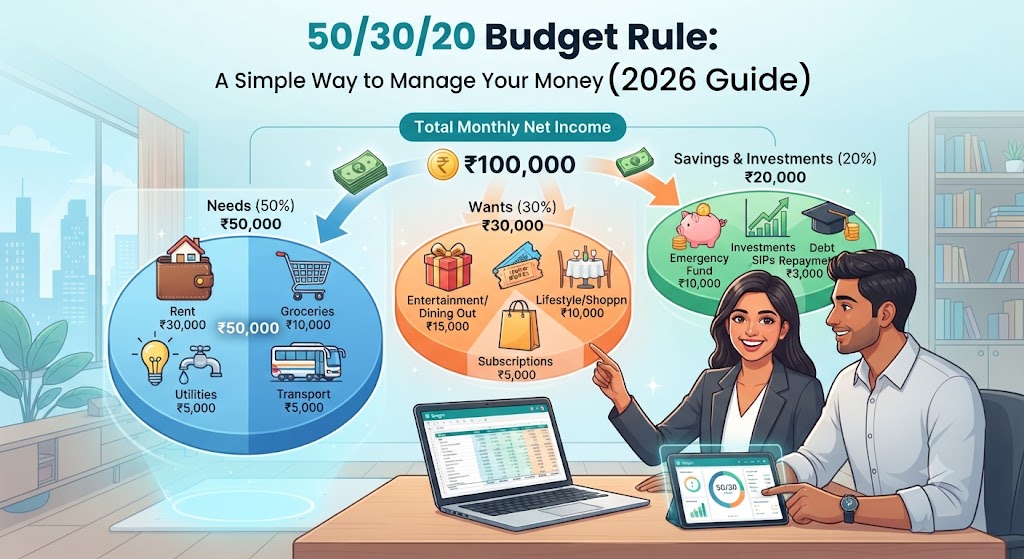
💰 50/30/20 Budget Rule: A Simple Way to Manage Your Money (2026 Guide)
Har mahine salary aati hai, lekin month ke end tak pata hi nahi chalta ki paisa kahan chala gaya? Agar aap bhi apni income ko better tarike se manage karna chahte hain, toh 50/30/20 Budget Rule ek simple aur practical budgeting framework ho sakta hai.
Is rule ke according aap apni after-tax income ko teen major categories mein divide karte hain — 50% Needs, 30% Wants aur 20% Savings & Investments. Isse aapko spending aur saving ke beech balance banane mein help mil sakti hai.
📖 Read Complete 50/30/20 Budget Rule Guide
What is the 50/30/20 Budget Rule?
50/30/20 Rule ek budgeting method hai jisme monthly take-home income ko broadly teen parts mein divide kiya jata hai:
- 🏠 50% – Needs: Essential aur necessary expenses.
- 🎯 30% – Wants: Lifestyle aur discretionary expenses.
- 💰 20% – Savings & Financial Goals: Savings, investments aur debt repayment.
💡 Golden Rule: Budget ka purpose har rupee ko restrict karna nahi, balki har rupee ko ek clear purpose dena hai.
50% – Needs: Zaroori Expenses
Needs woh expenses hain jo aapki basic lifestyle aur essential responsibilities ke liye zaroori hote hain. In expenses ko avoid karna ya bahut zyada reduce karna practical nahi hota.
- 🏠 Rent ya essential home expenses
- 🍲 Groceries aur basic food expenses
- 💡 Electricity, water aur basic utilities
- 🚗 Essential transportation expenses
- 🏥 Essential healthcare expenses
- 📚 Basic education-related expenses
- 🏦 Necessary loan/EMI payments
Agar aapke essential expenses income ke 50% se kaafi zyada hain, toh expenses review karna, income increase karna ya budgeting percentage ko temporarily adjust karna useful ho sakta hai.
30% – Wants: Lifestyle Expenses
Wants woh expenses hain jo life ko comfortable aur enjoyable banate hain, lekin survival ke liye essential nahi hote.
- 🍽️ Restaurant aur dining out
- 🎬 Movies aur entertainment
- ✈️ Travel aur vacations
- 🛍️ Shopping
- 📱 Premium subscriptions
- ☕ Cafes aur lifestyle expenses
- 🎮 Hobbies aur recreational activities
😊 Budgeting ka matlab enjoyment completely stop karna nahi hai. Goal hai ki lifestyle expenses aapke financial goals ko damage na karein.
20% – Savings, Investments & Financial Goals
20% category ka purpose future financial security build karna hai. Is amount ko aap apne goals aur financial situation ke according allocate kar sakte hain.
- 🚨 Emergency Fund: Unexpected expenses ke liye reserve build karna.
- 📈 Investments: Long-term financial goals ke liye suitable investments.
- 🏦 Debt Repayment: High-interest debt ko reduce karna.
- 🎓 Goal Planning: Children’s education jaise future goals ke liye corpus banana.
- 🏖️ Retirement Planning: Long-term retirement corpus ke liye investing.
Example: ₹50,000 Monthly Take-Home Income
Agar aapki monthly take-home income ₹50,000 hai, toh 50/30/20 framework ka basic example kuch is tarah ho sakta hai:
| Category | Percentage | Amount | Examples |
|---|---|---|---|
| Needs | 50% | ₹25,000 | Rent, food, utilities, EMI |
| Wants | 30% | ₹15,000 | Shopping, travel, entertainment |
| Savings & Goals | 20% | ₹10,000 | Emergency fund, investments, debt repayment |
50/30/20 Rule: Different Income Examples
| Monthly Income | 50% Needs | 30% Wants | 20% Savings |
|---|---|---|---|
| ₹30,000 | ₹15,000 | ₹9,000 | ₹6,000 |
| ₹50,000 | ₹25,000 | ₹15,000 | ₹10,000 |
| ₹75,000 | ₹37,500 | ₹22,500 | ₹15,000 |
| ₹1,00,000 | ₹50,000 | ₹30,000 | ₹20,000 |
Kya 50/30/20 Rule Har Kisi Ke Liye Same Hona Chahiye?
Nahi. 50/30/20 ek guideline hai, strict financial law nahi. Har family ki income, city, rent/EMI, family responsibilities, age, debt aur financial goals alag hote hain.
For example, agar kisi person ke essential expenses high hain, toh woh temporarily 60/20/20 ya 60/25/15 jaisa customised budget use kar sakta hai. High income aur low liabilities wale individuals savings/investments ka percentage aur zyada rakh sakte hain.
🎯 Best Budget Rule = Jo aapki income, responsibilities aur financial goals ke according realistically follow ho sake.
50/30/20 Budget Rule Ko Follow Kaise Karein?
- Monthly Take-Home Income Calculate Karein: Budgeting ke liye actual available income ko identify karein.
- Expenses Track Karein: Pichhle 2–3 months ke expenses review karein.
- Needs Aur Wants Separate Karein: Essential aur discretionary expenses ko alag categories mein rakhein.
- 20% Financial Goals Ke Liye Allocate Karein: Emergency fund, debt repayment aur investments ko priority dein.
- Automatic Savings Setup Karein: Salary aate hi savings/investment amount allocate karna useful ho sakta hai.
- Monthly Review Karein: Har month budget compare karke unnecessary expenses identify karein.
Common Budgeting Mistakes
- ❌ Salary badhte hi lifestyle expenses ko unnecessarily increase kar dena.
- ❌ Credit card spending ko income ka part samajhna.
- ❌ Emergency Fund ko ignore karna.
- ❌ Savings ko month ke end mein karna.
- ❌ Long-term goals ke liye investing delay karna.
- ❌ Budget ko family circumstances ke according review na karna.
Frequently Asked Questions
Q1. 50/30/20 Rule kya hai?
Yeh ek budgeting framework hai jisme take-home income ko approximately 50% needs, 30% wants aur 20% savings/financial goals mein divide kiya jata hai.
Q2. Kya 50/30/20 Rule salary ke gross income par apply hota hai?
Generally budgeting ke liye take-home income ya after-tax income ko base banana zyada practical hota hai.
Q3. Agar meri needs 50% se zyada hain toh kya karun?
Pehle essential expenses ko identify karein. Jahan possible ho, unnecessary costs reduce karein, debt ko review karein aur income badhane ke opportunities dekhein. Zarurat ke according budget percentages customise kiye ja sakte hain.
Q4. Kya 20% amount Mutual Funds mein invest karna chahiye?
Investment product ka selection aapke goal, time horizon, risk profile aur overall financial situation par depend karta hai. Puri 20% amount ko automatically ek hi investment product mein invest karna zaroori nahi hai.
Q5. Kya Emergency Fund bhi 20% category mein aa sakta hai?
Haan. Jab tak required emergency reserve build nahi ho jata, savings allocation ka ek portion emergency fund ke liye use kiya ja sakta hai.
Key Takeaway
💰 50% Needs + 🎯 30% Wants + 📈 20% Savings & Financial Goals
50/30/20 Rule ek simple starting framework hai jo aapko spending, saving aur investing ke beech better balance banane mein help kar sakta hai.
Create Your Personal Budget Plan
Har person ka ideal budget alag hota hai. Aapki income, family expenses, EMIs, existing savings, investments aur future goals ke according ek customised financial plan zyada useful ho sakta hai.
InvestSathi ke saath apne income aur financial goals ko review karke ek structured personal finance strategy par guidance lein.
Disclaimer: This article is for educational and informational purposes only and should not be considered professional financial, investment, tax, or insurance advice. The 50/30/20 framework is a general budgeting guideline and may not be suitable for every individual. Investment products are subject to market risks. Please consider your financial goals, risk profile and time horizon before making investment decisions.
“`