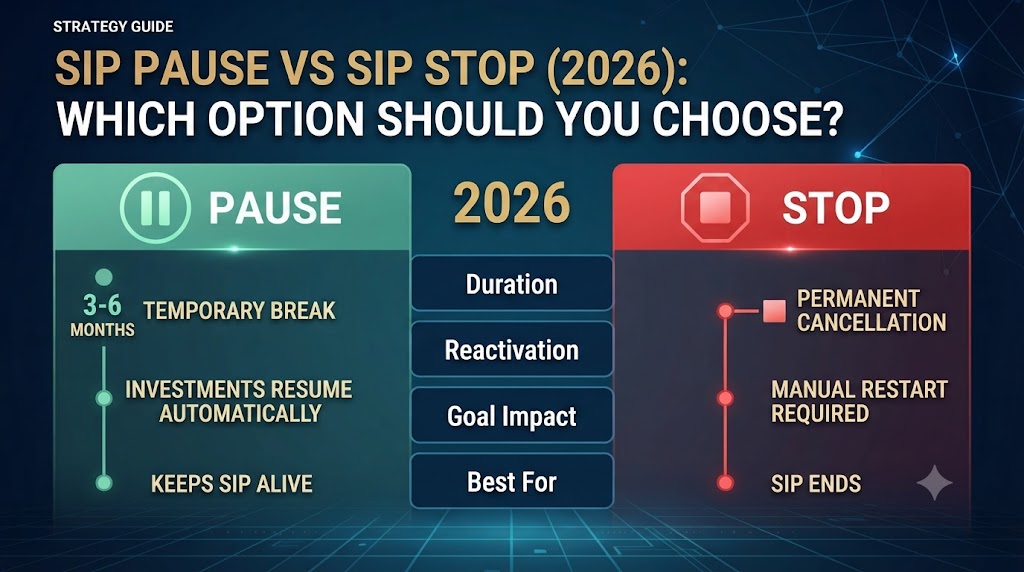
⏸️ SIP Pause vs SIP Stop (2026): Which Option Should You Choose?
Life doesn’t always go as planned. Temporary financial challenges, job changes, or unexpected expenses may make it difficult to continue your Systematic Investment Plan (SIP). In such situations, investors often wonder whether they should pause their SIP or stop it completely.
Although both options affect your future investments, they are very different. Understanding the difference between SIP Pause and SIP Stop can help you make a better financial decision while staying focused on your long-term goals.
📖 Read Complete Guide
What is SIP Pause?
A SIP Pause is a facility offered by many mutual fund houses that allows investors to temporarily suspend their SIP installments for a specified period. During the pause period, no new SIP installments are deducted, but your existing investments remain invested in the mutual fund.
What is SIP Stop?
SIP Stop means permanently discontinuing your SIP instructions. Once stopped, no future SIP installments will be deducted unless you start a new SIP again. Your existing mutual fund units generally remain invested unless you choose to redeem them separately.
SIP Pause vs SIP Stop
| Feature | SIP Pause | SIP Stop |
|---|---|---|
| Purpose | Temporary Break | Permanent Discontinuation |
| Future SIP | Automatically Resumes (subject to AMC rules) | Ends Completely |
| Existing Investment | Remains Invested | Remains Invested Unless Redeemed |
| Best For | Short-Term Financial Difficulties | Long-Term Investment Changes |
When Should You Consider SIP Pause?
- ✅ Temporary job loss.
- ✅ Medical emergencies.
- ✅ Unexpected expenses.
- ✅ Temporary cash flow issues.
- ✅ Planning to resume investing after a few months.
When Should You Consider SIP Stop?
- ✅ Financial goals have changed.
- ✅ Switching to a different investment strategy.
- ✅ Major portfolio restructuring.
- ✅ Long-term inability to continue investing.
- ✅ Closing an investment plan permanently.
Advantages of SIP Pause
- 📈 Maintains investment discipline.
- 💰 No need to start a new SIP later.
- 📅 Automatically resumes after the pause period (if applicable).
- ⚖ Provides flexibility during temporary financial stress.
- 🎯 Keeps long-term financial goals on track.
Disadvantages of Stopping SIP
- ❌ Missed investment opportunities.
- ❌ Reduced benefit from rupee cost averaging.
- ❌ Slower long-term wealth creation.
- ❌ Need to create a new SIP if you decide to invest again.
Common Mistakes Investors Make
- ❌ Stopping SIP during market corrections.
- ❌ Reacting emotionally to short-term volatility.
- ❌ Ignoring long-term financial goals.
- ❌ Redeeming investments unnecessarily.
- ❌ Not checking the SIP Pause facility available with the AMC.
Frequently Asked Questions (FAQs)
Q1. Does SIP Pause affect my existing investment?
No. A SIP Pause only suspends future installments for the selected period. Your existing mutual fund units generally remain invested.
Q2. Can I restart a stopped SIP?
Yes. However, in many cases you may need to register a new SIP instruction, depending on the mutual fund house’s process.
Q3. Is SIP Pause available in every mutual fund?
Not always. Availability, eligibility, and pause duration may differ across asset management companies (AMCs). Check the specific scheme or AMC guidelines.
Q4. Which is better—SIP Pause or SIP Stop?
If your financial difficulty is temporary, a SIP Pause may be more suitable. If your investment goals or financial situation have changed permanently, stopping the SIP may be appropriate.
Key Takeaway
A SIP Pause offers flexibility during temporary financial challenges while allowing you to continue your long-term investment journey. Stopping a SIP is generally better suited for permanent changes in your financial plans. Before making a decision, review your financial goals, cash flow, and investment strategy.
Disclaimer: This article is for educational purposes only and should not be considered financial or investment advice. Mutual fund investments are subject to market risks. Please read all scheme-related documents carefully before investing and consult a qualified financial advisor before making investment decisions.